No products in the cart.

Solar Lamps & Emergency Lighting: What Smart Buyers Should Check First
When the grid dips, households and small shops need light that actually lasts—not a bargain torch that dies mid-evening. Choosing the best solar lamps in Africa means matching real outage patterns with honest runtime, charging options, and build quality you can verify on the product page.
This Afriyah guide is for commercial investigation, not hype. We focus on rechargeable lamps, emergency lighting, and off-grid lighting decisions buyers make before checkout. We do not invent prices, stock levels, GTINs, or medical claims. Confirm every detail on the live listing before you order.
What buyers usually get wrong
Outage lighting purchases often fail for predictable reasons:
- Buying on brightness claims alone without checking how long the lamp runs at a usable level.
- Assuming “solar” always means a full day’s charge from weak morning sun or a shaded window.
- Ignoring whether the unit can also charge from USB or mains when sunlight is poor for several days.
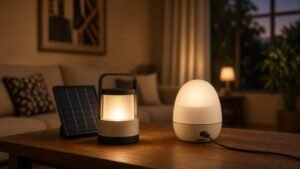
- Treating a lifestyle photo as the full kit—panels, cables, or spare bulbs may be sold separately.
- Underestimating dust, heat, and daily handling in kitchens, kiosks, and shared family rooms.
Power outage lighting should solve a named job: evening study, a shop counter after dark, or a safe path through the house. If you cannot name that job, pause before you add to cart.
What specs matter most
When you compare solar lamps and emergency lighting, read for facts you can check—not adjectives.
- Runtime at a stated brightness. Prefer listings that explain how long light lasts on high, medium, or eco modes. A “bright” lamp that fades in an hour rarely serves a full outage evening.
- Charging paths. Solar panels help for off-grid lighting, but USB or AC charging is valuable when weather or placement limits sun. Note charge time where it is published.
- Light quality and modes. Warm vs cool tone, focused vs flood, and whether a low mode exists for overnight use matter more than a single peak-lumen number.
- Build and weather expectations. Outdoor or porch use needs clear guidance on water and dust resistance. Indoor-only lamps should say so.
- Portability vs fixed use. Handles, hanging hooks, and weight decide whether a lamp moves between rooms or stays on one shelf.
- Support path. Check return windows and how to reach support before you commit. Afriyah’s published policies should match what you see at checkout.
How to compare real value
Value is nights of reliable light per purchase, not the first flash in a short video.
- Write down your outage pattern (for example: two-hour evening cuts, or longer multi-day interruptions).
- Shortlist two or three rechargeable lamps that state runtime and charging in plain language.
- Compare what is in the box: lamp only, panel included, cable types, and spare parts if listed.
- Match brightness modes to the room size—shop counters need different light than a bedside task.
- Prefer consistent titles and specs over superlatives. If a claim cannot be checked on the page, treat it as noise.
This checklist keeps you focused on practical emergency lighting for homes, families, and small businesses rather than viral novelty lights.
Recommended product paths on Afriyah
Start with discovery, then verify each listing.
- Browse solar lamps, rechargeable lights, and home lighting essentials on the Afriyah shop.
- Open each product page and confirm price, availability, included items, and charging details before checkout. Category tiles and blog guides should match the product page and cart.
- Treat lighting as part of a wider outage plan: lamps that sip power and offer a low overnight mode are easier to live with during repeated cuts.
Afriyah’s role is seller-led discovery with clear listing facts. Your final check is always the product page itself.
FAQs buyers search before purchase
What should I check first when buying solar lamps for African homes?
Start with runtime at a usable brightness, how the lamp recharges (solar, USB, or both), and whether the listing matches your indoor or outdoor use. Then confirm inclusions and return terms on the product page.
Is solar charging enough on cloudy days?
Not always. Many practical setups rely on solar when sun is available and USB or mains charging as backup. Read the listing for supported charge methods instead of assuming sun alone will cover every week.
How is emergency lighting different from a normal torch?
Emergency lighting is usually chosen for longer household or shop use during outages—stable light for tasks, multiple modes, and rechargeable operation—rather than short bursts of beam for walking outdoors. Choose by the job you need done.
Can one lamp cover a whole shop or family house?
Often you need more than one light source: a brighter unit for work areas and a lower-power lamp for corridors or overnight. Compare coverage claims against your room sizes and shortlist accordingly.
Where should I start shopping on Afriyah?
Begin at the shop, filter toward solar and rechargeable lighting that fits your outage pattern, then verify each product page for specs, price, and stock status. Use this guide as a checklist, not a substitute for listing facts.
Ready to compare practical options? Explore solar lamps and emergency lighting with clear specs on the Afriyah shop and choose what fits your home or small business routine.