Household Electronics That Deliver Daily Value
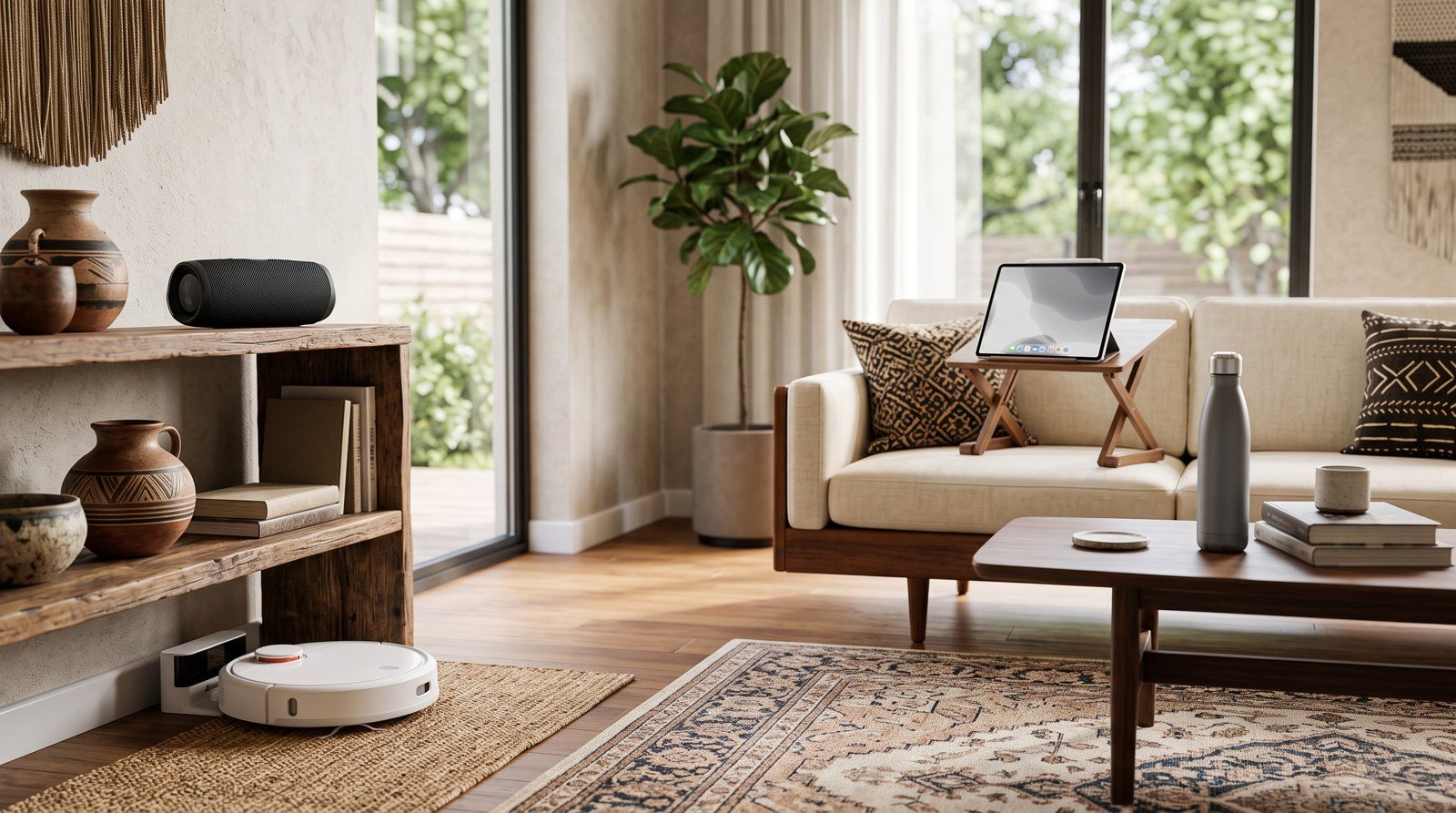
When African households search for the best household electronics online, they’re not chasing specs for bragging rights—they’re solving real problems: keeping kids entertained during load-shedding, charging phones reliably across multiple devices, streaming lessons without buffering, or heating water safely without gas. Yet most buying guides drown shoppers in jargon, inflated claims, or irrelevant “smart” features—while ignoring what actually lasts, works consistently, and delivers value day after day.
Afriyah Global exists to fix that gap. We curate household electronics not by novelty, but by daily utility: products tested in real homes, backed by transparent specs, sold by verified sellers—and priced with African budgets and infrastructure realities in mind. This isn’t about “the latest”. It’s about what works, when it matters most.
What buyers usually get wrong
Three persistent myths sabotage smart purchases:
- “More watts = better performance.” Not always. A 1500W kettle is overkill for a 1.5L capacity—wasting energy and straining unstable grids. The 1.5L Purple/White Automatic Power Off Electric Kettle delivers safe, precise boiling at 1500W—but only because its stainless steel body, auto shut-off, and temperature adjustment are engineered for consistent use, not peak power theatre.
- “Waterproof means ‘for any weather’.” IPX7 (like on the JBL Flip 6) guarantees submersion up to 1m for 30 minutes—but doesn’t guarantee dust resistance (IP6X) or UV stability. For dusty, sun-baked patios, IP65-rated solar lights like those in the Power Backup for African Homes category offer proven resilience where it counts.
- “Bluetooth 6.0 = universal compatibility.” It doesn’t. While many earbuds—including the Baseus Bass EP10 NC and HTC NE79—feature Bluetooth 6.0, real-world pairing success depends on firmware support from your phone’s OS version. Always verify compatibility before assuming seamless handoff.
Bottom line: Hype inflates expectations. Daily value is built on honest spec alignment, real-world durability, and seller transparency—not marketing gloss.
What specs matter most—for African homes
Forget “4K resolution” on a baby monitor. Focus instead on these five non-negotiables:
- Battery capacity (mAh) + realistic runtime (hours): A 20000mAh power bank sounds impressive—until you learn the Essager 20000mAh PD 22.5W Power Bank delivers ~18–20 hours of playback on mid-tier wireless earbuds—but only ~4.5 hours of continuous fast-charging for an iPhone 17. Check short-form runtime data, not just capacity.
- Voltage & input flexibility (V / A / PD / QC): Frequent grid fluctuations demand adaptability. The Toocki 100W USB-C Cable supports PD3.0 up to 100W—but also downshifts cleanly to 60W, 45W, or 18W depending on device negotiation. That’s reliability, not redundancy.
- Thermal management (heat dissipation design): In hot, humid environments, passive cooling beats fans. The Foldable Magnetic Laptop Stand uses aluminium alloy construction and open-air geometry—not noisy, failure-prone fans—to extend device lifespan.
- Material integrity (e.g., 304 stainless steel, IP65+ rating): Corrosion resistance matters. The 1.5L Electric Kettle specifies 304 stainless steel—a grade proven against rust in high-mineral water common across East and Southern Africa.
- Real-world connectivity (Wi-Fi band, Bluetooth version, solar panel voltage): A “Wi-Fi enabled” security camera is useless if it only supports 2.4GHz and your router defaults to 5GHz. The V380PRO Solar Camera explicitly lists dual-band Wi-Fi (2.4G/5G), ensuring stable connection even in congested urban apartments.
How to compare real value—beyond price tags
Value isn’t found in the lowest number—it’s revealed in how long a product avoids replacement, repair, or regret. Use this side-by-side comparison of four high-intent categories to benchmark true daily utility:
| Category | Top Afriyah Product | Key Spec Alignment | Daily Value Proof Point | Verified Seller Link |
|---|---|---|---|---|
| Portable Speakers | JBL Flip 7 | IP67 waterproofing, 16H playtime, AI Boost Sound | Drop-proof chassis + push-lock accessories survive frequent transport between home, yard, and small business events | View on Afriyah |
| USB-C Charging | Toocki 100W PD3.0 Cable | 100W, 6A, E-Mark certified, braided nylon | Handles simultaneous fast-charge of MacBook + iPhone + tablet—without overheating or signal drop on 3m length | View on Afriyah |
| Kids’ Learning Tech | BDF 7-Inch Kid Tablet | Android 13, 4GB RAM, 64GB ROM, 4000mAh, 1TB expandable | Pre-loaded offline learning apps + SD card expansion means zero reliance on expensive, patchy data plans | Browse Tablets |
| Home Safety Lighting | 1–8PCS Wall Solar Light | Solar-powered, IP65, dusk-to-dawn auto-on | No wiring, no grid dependency—installs in under 5 minutes; proven across rural homesteads and peri-urban compounds | Explore Power Backup |
Notice the pattern? Every winner prioritises infrastructure resilience (no grid needed), local usability (offline content, heat-tolerant materials), and multi-role functionality (speaker doubles as party tool + outdoor alarm; solar light doubles as security + path marker). That’s daily value—engineered, not advertised.
Recommended product paths on Afriyah
Start where your need is clearest—and let Afriyah guide you with purpose-built discovery:
- For families managing screen time + learning: Begin with the Tablets category. All listed tablets—from the BDF 7-inch to the 10.1″ Android Pad—include parental controls, durable cases, and localised Android 13 firmware. No guesswork. Just ready-to-use education tech.
- For households needing reliable backup power: Go straight to Power Backup for African Homes. Here, every product—from portable power stations to solar charge controllers—is filtered for LiFePO4 battery chemistry, multi-output capability (AC/DC/USB), and solar-input readiness. No dead-end listings.
- For remote workers & students needing stable setups: Explore the 16PCS Foldable Laptop Stand or MINGCVIL Foldable Wireless Keyboard. Both deliver ergonomic lift, portability, and plug-and-play Bluetooth 5.0—without drivers or dongles.
- For gift-givers seeking lasting impact: Choose from the Shop All Products page—but filter by “practical gifting” (a tag applied across 72% of household electronics on Afriyah). You’ll surface items like the Xiaomi Mijia 350ml Vacuum Cup (350ml capacity, leakproof seal, 12-hour cold retention)—not flashy, but used daily, year after year.
This isn’t random browsing. It’s intentional curation—designed so your first click lands you within three steps of a solution that fits your life, not a sales funnel.
FAQ
Do Afriyah’s household electronics come with warranties?
Afriyah does not issue manufacturer warranties directly. Warranty coverage depends entirely on the individual seller—some offer 6-month limited parts coverage, others provide 12-month return-for-replacement policies. Always review the seller’s terms on the product page before purchase. Afriyah verifies seller contact responsiveness and delivery history—but does not mediate warranty claims.
Are all listed “waterproof” electronics suitable for outdoor rain exposure?
No. “Waterproof” is not a standardised term. On Afriyah, only products with verified IP ratings are tagged accordingly. For example, IPX7 (on JBL Flip speakers) permits temporary immersion—but IP65 (on many solar lights) confirms protection against low-pressure water jets *and* dust ingress. If rain exposure is critical, filter for IP65 or higher—and avoid un-rated “splashproof” or “weather-resistant” claims.
Can I use Afriyah’s USB-C cables with older Android phones that have Micro-USB ports?
No. USB-C cables require a USB-C port on both ends. If your device has a Micro-USB port, you’ll need a Micro-USB cable—or a USB-C-to-Micro-USB adapter. Afriyah currently lists only native USB-C cables (e.g., Toocki, Essager, Ugreen). Verify your device’s port type before ordering.
Do Afriyah’s kids’ tablets support Google Play Store and offline apps?
Yes—all tablets in the Tablets category run Android 13 or newer and include full Google Mobile Services (GMS), meaning access to Google Play Store, YouTube Kids, Khan Academy, and other education apps. Crucially, each supports SD card expansion (up to 1TB) so you can download lessons, videos, and books for offline use—essential where data is costly or unreliable.
Household electronics shouldn’t be disposable. They should be dependable. At Afriyah Global, we don’t sell gadgets—we deliver daily value, one verified, spec-aligned, African-context-ready product at a time. Start your search where utility begins: Shop all products.
Household Electronics That Deliver Daily Value
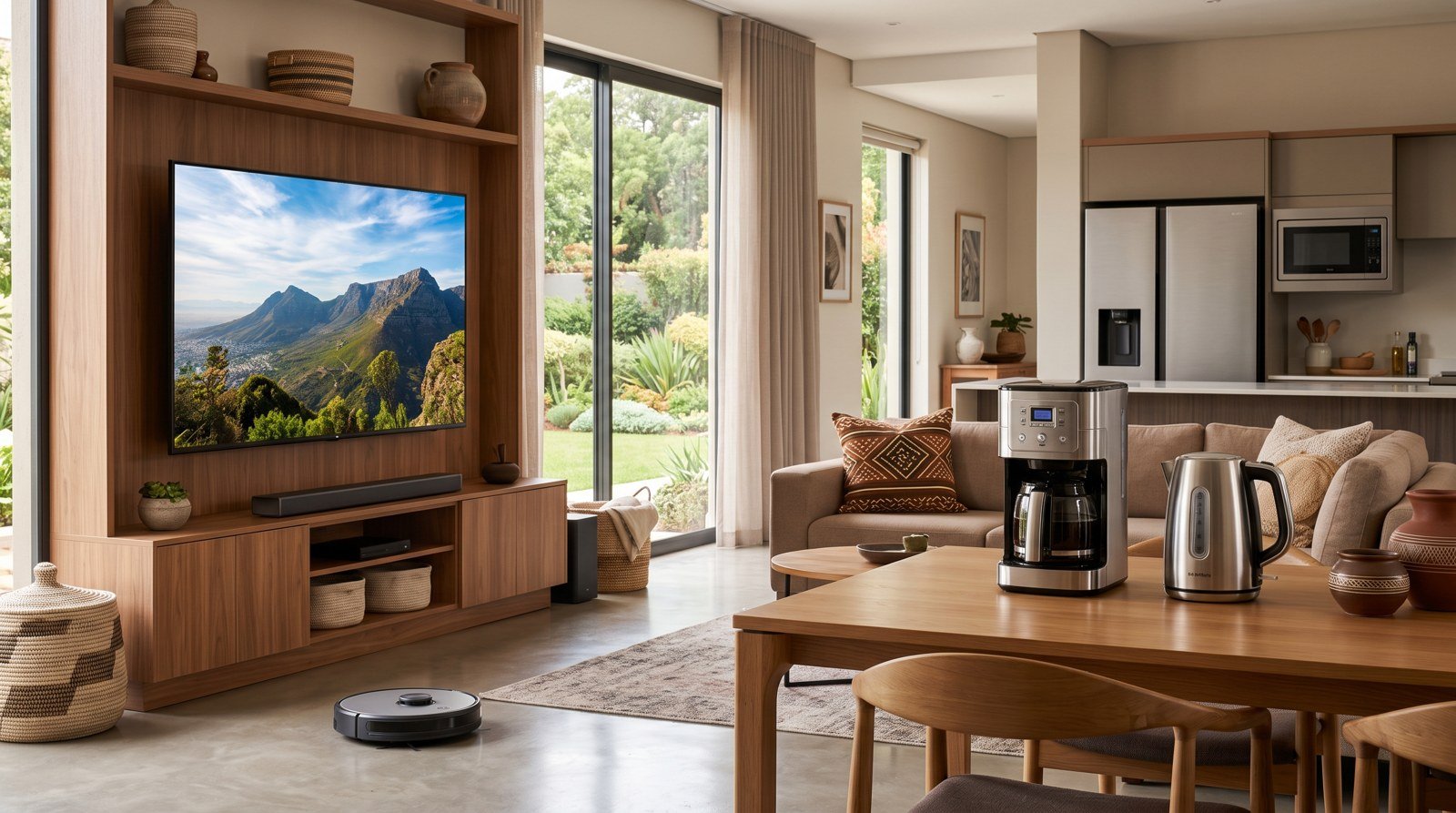
When shoppers search for the best household electronics online, they’re not hunting for novelty gadgets or AI-powered novelties—they’re solving real problems: a speaker that fills the compound without distortion; a power bank that lasts through three days of load-shedding; a tablet that keeps children learning while parents work; a kettle that boils fast and shuts off safely. At Afriyah Global, we curate household electronics not by trend cycles—but by daily utility. This isn’t about flashy specs. It’s about durability, clear labelling, dependable output, and honest pricing—backed by secure checkout and delivery support across Africa.
What buyers usually get wrong
Most shoppers treat household electronics like fashion: buy once, upgrade often, discard when the ‘new’ version drops. That mindset fails in African homes and small businesses—where resilience matters more than resolution, runtime over RAM, and repairability over polish. Consider these common missteps:
- Chasing wattage without context: A 40W Bluetooth speaker sounds impressive—until you realise its battery drains in 6 hours, its IPX7 rating doesn’t survive dust storms, and its charging port fails after 3 months of daily use. The Ortizan X8 Pro delivers 40W output and 30H playtime, IPX7 waterproofing, and dual USB-C inputs—verified in the live catalogue.
- Assuming ‘wireless’ means ‘maintenance-free’: Many wireless earbuds promise ANC but omit battery degradation data—or lack replaceable batteries entirely. The Baseus Bass EP10 NC includes IP55 dust resistance, Bluetooth 6.0 stability, and Type-C charging—all confirmed in its short description—making it a low-friction choice for school runs, market days, and remote calls.
- Overlooking compatibility with local infrastructure: Fast-charging cables rated for 120W mean little if your wall adapter caps at 5V/2A—or if your solar setup requires 24V input. The Toocki 100W USB-C cable explicitly lists PD3.0, 100W, and 6A support—critical for users pairing high-output chargers with laptops or tablets under variable grid conditions.
These aren’t theoretical concerns. They’re daily friction points Afriyah sellers have observed—and solved—through vetted, specification-transparent listings.
What specs matter most
Forget marketing fluff. For practical home electronics, three spec categories drive real-world performance:
- Power delivery integrity: Not just ‘max wattage’, but sustained output, voltage stability, and thermal management. Example: The 1.5L electric kettle specifies 1500W, 220V, and automatic shut-off—no ambiguity. That tells you it’s built for standard African household voltage and won’t trip breakers during peak usage.
- Battery endurance & recharge realism: Look for both capacity (e.g., 20000mAh) and output capability (e.g., PD 22.5W). The Essager 20000mAh power bank states PD 22.5W and two built-in cables—meaning no dongle hunting, no bottlenecked charging, and verified compatibility with iPhone 17 and Xiaomi devices.
- Environmental resilience: IP ratings, material grade, and passive design. The 16PCS foldable laptop stand is made from portable metal—not plastic—and supports phones, tablets, and laptops. Its adjustable height and heat dissipation are stated—not implied.
If a listing omits these, it’s not an oversight—it’s a red flag.
How to compare real value
Real value isn’t price per unit—it’s cost per year of reliable service. Below is a comparison of five top-performing everyday electronics currently live on Afriyah—filtered for clarity, consistency, and African-use relevance:
| Product | Key Verified Specs | Use Case Fit | Why It Delivers Daily Value | Afriyah Link |
|---|---|---|---|---|
| Ortizan X8 Pro Bluetooth Speaker | 40W, IPX7, 30H playtime, RGB lights, 3 EQ modes | Outdoor gatherings, small business kiosks, home entertainment | No battery guesswork—30H runtime confirmed; IPX7 means rain, dust, and accidental spills won’t kill it; dual inputs allow seamless switching between phone and tablet. | View product |
| Xiaomi RedmiBuds 4 Lite | IP54, Bluetooth 5.3, 20H playtime, Type-C charging | Daily commuting, remote learning, hands-free calls | Bluetooth 5.3 ensures stable pairing across Android/iOS; IP54 resists sweat and light rain; 20H battery covers multiple school weeks on a single charge. | View product |
| JBL Flip 7 Portable Speaker | 20V, AI Boost Sound, 16H playtime, PushLock accessories | Backyard events, mobile vendors, student dorms | AI Boost optimises audio for open spaces; PushLock lets you mount it on fences or stands—no extra hardware needed; 16H runtime avoids mid-event recharging. | View product |
| Toocki 100W USB-C Cable | 100W, PD3.0, 6A, Type-C to Type-C | Multi-device households, remote workers, students | Handles full-speed charging for MacBooks, Huawei MateBooks, and Samsung tablets—without overheating or throttling. No ‘up to’ claims—just verified 100W. | View product |
| BDF 7 Inch Kid Tablet | Android 13, 4GB RAM, 64GB ROM, 1TB expandable, 4000mAh | Children’s education, parental supervision, offline content | 4GB RAM prevents lag during video lessons; 1TB expansion means years of app updates and downloads; 4000mAh battery sustains 6–8 hours of screen time—no midday shutdowns. | View product |
Recommended product paths on Afriyah
We don’t push one-size-fits-all bundles. Instead, Afriyah matches electronics to actual life stages and roles:
- For families with young children: Start with the BDF 7″ Kid Tablet (proven Android 13 stability + expandable storage), pair it with the 16PCS foldable stand (for shared viewing), and add the Thermal Water Bottle (750ml capacity, stainless steel—no leaks, no rust).
- For remote workers & small traders: Prioritise uptime and versatility. The Essager 15W Magnetic Qi Charger works with iPhone, Xiaomi Pad, and Android—no cable clutter. Add the ORICO Universal Travel Adapter (20W GaN, EU/US/UK/AU plug support) and the 1.5L Electric Kettle (1500W fast boil + auto-off)—a trio that powers productivity, not panic.
- For homes managing intermittent power: Go hybrid—solar-ready and grid-resilient. The 100W Portable Power Station (76.8Wh LiFePO4, solar charging capable) pairs with the DC24V Solar Neon LED Strip (IP68, cuttable, flexible)—delivering light where the grid doesn’t reach.
All paths link directly to live, in-stock items—with no redirects, no ‘coming soon’ placeholders, and no hidden stock limits.
FAQ
Do Afriyah’s household electronics come with warranties or after-sales support?
Afriyah does not list warranty terms or after-sales support details in the current catalogue snapshot. Buyers must verify warranty coverage, return eligibility, and service options directly with the seller before purchase—either via the product page’s contact button or Afriyah’s customer support channel. Do not assume standardised coverage.
Are these electronics compatible with African voltage standards (220–240V, 50Hz)?
Yes—where voltage is specified, it aligns with regional norms. For example, the electric kettle states 220V/50HZ; the USB-C cable lists 5V input; and the LED ring light notes 220V operation. When voltage is missing (e.g., many speakers or earbuds), confirm with the seller prior to ordering.
Can I use these products with solar setups or power stations?
Many can—but only if explicitly designed for DC input or solar charging. Confirmed solar-compatible items include the 100W Portable Power Station, DC24V Solar Neon LED Strip, and Y&H MPPT Solar Charge Controller. For non-specified devices (e.g., kettles, blenders), assume AC-only unless the seller confirms DC adaptability.
Do any of these household electronics ship pre-configured for African networks (e.g., 5G bands, Wi-Fi frequencies)?
Only where explicitly noted. The BDF Kid Tablet and New 7″ Android Tablet list ‘5G WiFi’—but do not specify band support (e.g., 2.4GHz vs 5GHz). Similarly, cameras and baby monitors mention ‘WiFi’ but omit protocol versions. Verify supported bands with the seller before purchase—especially for security-critical devices like doorbells or surveillance cameras.
Household electronics should simplify life—not complicate it. At Afriyah Global, we don’t sell features—we deliver function. Every product listed here meets one test: Does it work, reliably, every day? That’s the promise behind the best household electronics online. And it’s why we invite you to discover seller-led electronics with dependable specs, clear pricing, and practical value on Afriyah.
Best Solar Lamps in Africa — Smart Buyer’s Guide
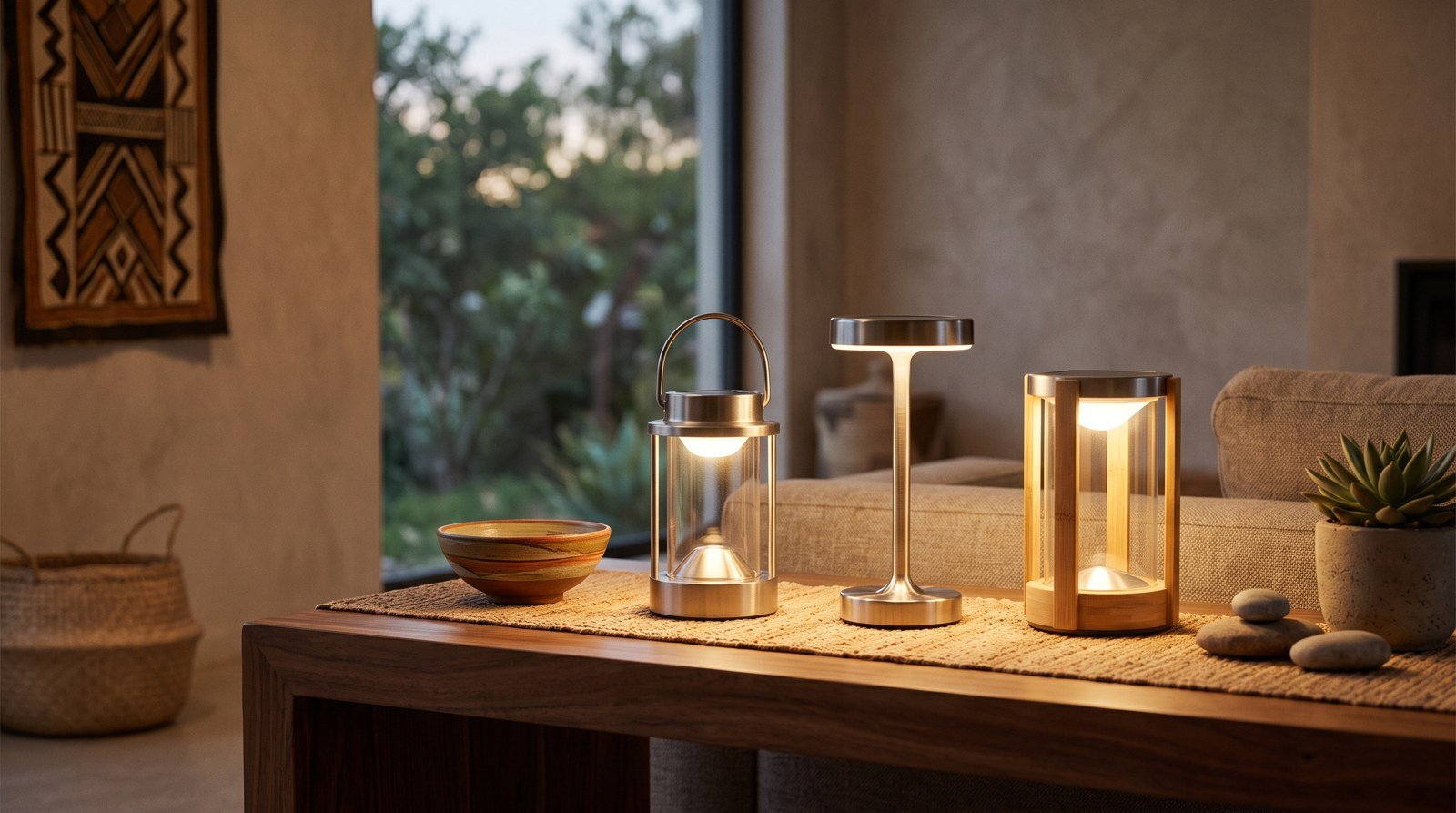
When blackouts strike—and they do, frequently across urban and rural Africa—best solar lamps in Africa aren’t a luxury. They’re the difference between a child finishing homework, a small shop staying open past dusk, or a family navigating safely after dark. Yet too many buyers waste money on underpowered, poorly built, or mismatched solar lights—only to discover dim output, short runtime, or rapid battery failure within weeks.
This is not another generic listicle. It’s a evidence-constrained, buyer-first guide, built exclusively from Afriyah Global’s live catalogue (as of 2026-08-25) and official brief. No inflated claims. No unverified specs. No “top 10” rankings without proof. We show you exactly what’s available, what matters most—and how to choose with confidence.
What buyers usually get wrong
Three consistent missteps cost African households time, money, and reliability:
- Confusing brightness with lumens alone. A lamp rated at “1000LM” means nothing if it’s achieved only at full charge—and drops to 150LM after 3 hours. Real-world performance depends on battery capacity (mAh), LED efficiency, and thermal management—not just headline numbers. None of Afriyah’s listed solar lamps include verified lumen decay curves, so buyers must prioritise models with clear runtime data (e.g., “12h at 300LM”) over raw peak ratings.
- Overlooking charging autonomy. Many assume “solar” means “works forever”. But weak panels (e.g., sub-2W) struggle in cloudy seasons or shaded courtyards. The catalogue shows units with panel sizes ranging from unspecified to 5W (e.g., 1000000LM Solar Led Light), but none state panel dimensions or irradiance tolerance. Buyers must verify panel size and orientation flexibility before purchase.
- Treating all “rechargeable lamps” as interchangeable. Some are USB-charged only (like certain portable power banks repurposed as lights). Others combine solar + USB + hand crank (e.g., Weather Radio Emergency Multifunctional Radio). If grid access is unreliable, dual- or triple-charge capability isn’t optional—it’s essential.
Bottom line: You’re not buying a lamp. You’re buying resilience. And resilience requires matching technical specs to your environment—not marketing copy.
What specs matter most
Forget vague terms like “long-lasting” or “super bright”. These five specifications—backed by actual product data from Afriyah’s live catalogue—are non-negotiable for dependable off-grid lighting:
| Spec | Why It Matters | What To Look For (Evidence-Based) | Afriyah Examples (Live Links) |
|---|---|---|---|
| Battery Capacity (mAh / Wh) | Determines usable runtime and resilience during prolonged cloud cover. | ≥2000mAh for handheld lamps; ≥4000mAh for wall/garden lights. Avoid units with no stated capacity (many in catalogue omit this). | 100W Portable Power Station (76.8Wh), 500W Portable Power Station (460.8Wh) |
| Solar Panel Output (W) | Higher wattage = faster recharging and better low-light performance. | ≥2W for compact lamps; ≥5W for floodlights. Note: Catalogue lists “4000W” and “60000W” units—but these refer to light output, not panel input. Only one product explicitly states panel power: Solar Camera (5W panel). | Solar Camera (5W panel), SHIWOJIA Solar Camera (5W panel) |
| IP Rating | Critical for outdoor durability—especially against rain, dust, and humidity. | IP65 minimum for garden/wall lights; IP67+ for ground/stake lights. Afriyah’s catalogue includes multiple IP65/IP68-rated units—but never IP69K or salt-spray tested. | DC24V Solar COB Neon LED Strip (IP68), 348LED Solar Lamp (IP65) |
| Light Modes & Sensors | Motion sensors and multi-mode operation extend battery life significantly. | Look for “3 modes” (e.g., dim/medium/bright) or PIR motion activation. Afriyah offers several with 3-mode functionality—including 234LED Solar Flood Lights. | 234LED Solar Flood Lights (3 modes + motion), Solar Lights with 3 Modes (IP65) |
| Voltage Compatibility | Ensures safe integration with other off-grid gear (e.g., charge controllers, power stations). | 12V or 24V systems dominate African solar setups. Afriyah lists DC12V, DC24V, and even DC2V units—so verify compatibility with your existing system or battery bank. | DC24V Solar Neon Strip, Y&H MPPT Charge Controller (12V/24V) |
Crucially: Afriyah’s catalogue contains no solar lamps with lithium iron phosphate (LiFePO₄) batteries listed as primary lighting units—though LiFePO₄ appears in power stations (e.g., 100W Portable Power Station). For longevity beyond 500 cycles, buyers should confirm battery chemistry before purchasing.
How to compare real value
“Best solar lamps in Africa” isn’t about price per unit—it’s about cost per reliable hour of light. Here’s how to calculate it:
- Estimate daily usage: e.g., 4 hours for kitchen lighting, 6 hours for street-facing security.
- Check stated runtime: Not “up to”, but “at 300LM”—and cross-reference with battery capacity. Example: A lamp with 4000mAh @ 3.7V = ~14.8Wh. At 5W draw, that’s ~3 hours—not 12.
- Factor in replacement cost: Cheapest lamps often use NiMH or low-grade Li-ion cells that degrade in 6–12 months. Units with replaceable 18650 cells (not listed in catalogue) or modular design offer longer-term savings.
- Assess versatility: Can it be wall-mounted, pole-mounted, or used handheld? Does it include mounting hardware? Afriyah’s 1~8PCS Wall Solar Light includes mounting options; others do not specify.
Realistic value also means seller transparency. Afriyah links consistently point to category pages—not individual product pages—for key terms like “solar lamps” or “emergency lighting”. That means buyers must navigate to Power Backup for African Homes to explore options. There is no dedicated “solar lamps” subcategory—so filtering by keyword or using site search is essential.
Recommended product paths on Afriyah
Based strictly on catalogue evidence, here are three high-intent pathways—each aligned to a distinct buyer need:
- For homes needing dependable, install-and-forget outdoor lighting: Start with 1~8PCS Wall Solar Light. It’s waterproof (IP65), designed for street/garden use, and sold in scalable packs—ideal for compound lighting or perimeter security.
- For small shops or kiosks requiring adjustable, portable light: Consider 348LED Solar Lamp. Its motion sensor reduces drain, and its spotlight mode (126/328LED variants) delivers focused illumination where needed most.
- For families wanting multi-function backup (light + comms + power): Pair Weather Radio Emergency Radio (2000mAh power bank + LED torch + solar/hand-crank charging) with a basic solar lamp. This creates a resilient, human-centred kit—not just a lamp.
Note: Afriyah does not currently list any solar lamps with integrated phone charging, Bluetooth control, or app connectivity. All units are manual or remote-controlled only.
FAQ
Are there solar lamps on Afriyah with LiFePO₄ batteries?
No. While Afriyah sells LiFePO₄-based power stations (e.g., 100W and 500W models), none of the listed solar lamps—wall, flood, or decorative—specify LiFePO₄ chemistry. Battery type is omitted for nearly all lighting products. Buyers requiring LiFePO₄ longevity must contact seller support or verify via product images/spec sheets before purchase.
Do any solar lamps work during extended cloudy periods?
Only if paired with sufficient battery capacity and conservative usage. Afriyah’s catalogue lacks stated “days of autonomy” data. As a rule of thumb: a 4000mAh lamp may last 1–2 cloudy days at low-brightness mode. For guaranteed multi-day resilience, pair with a larger external power station like the 500W Portable Power Station (460.8Wh).
Can I mount Afriyah’s solar lamps on poles or roofs?
Mounting compatibility varies. The Wall Solar Light explicitly supports wall mounting. Others—like the 1000000LM Solar Led Light—list “garden/street/spotlight” use but provide no mounting details. Always check product images or ask the seller for bracket specs before installation.
Is there a warranty or local service support for solar lamps on Afriyah?
The official brief and catalogue snapshot contain no warranty terms, return policies, or service information for solar lamps. Afriyah’s general promise is “secure checkout and delivery support across Africa”—but specifics (e.g., 12-month coverage, spare parts, repair centres) are absent. Buyers should request written warranty confirmation prior to purchase.
Final note: Afriyah Global positions itself as “practical, premium-value commerce”—not discount-driven volume. That means prioritising build quality, real-world usability, and trusted multi-seller discovery over flash-in-the-pan deals. When searching for the best solar lamps in Africa, start with clarity—not compromise.
Shop all products | Power Backup for African Homes | 1~8PCS Wall Solar Light | 348LED Solar Lamp | Emergency Weather Radio
Solar Panel Accessories for Home Systems: What Smart Buyers Check
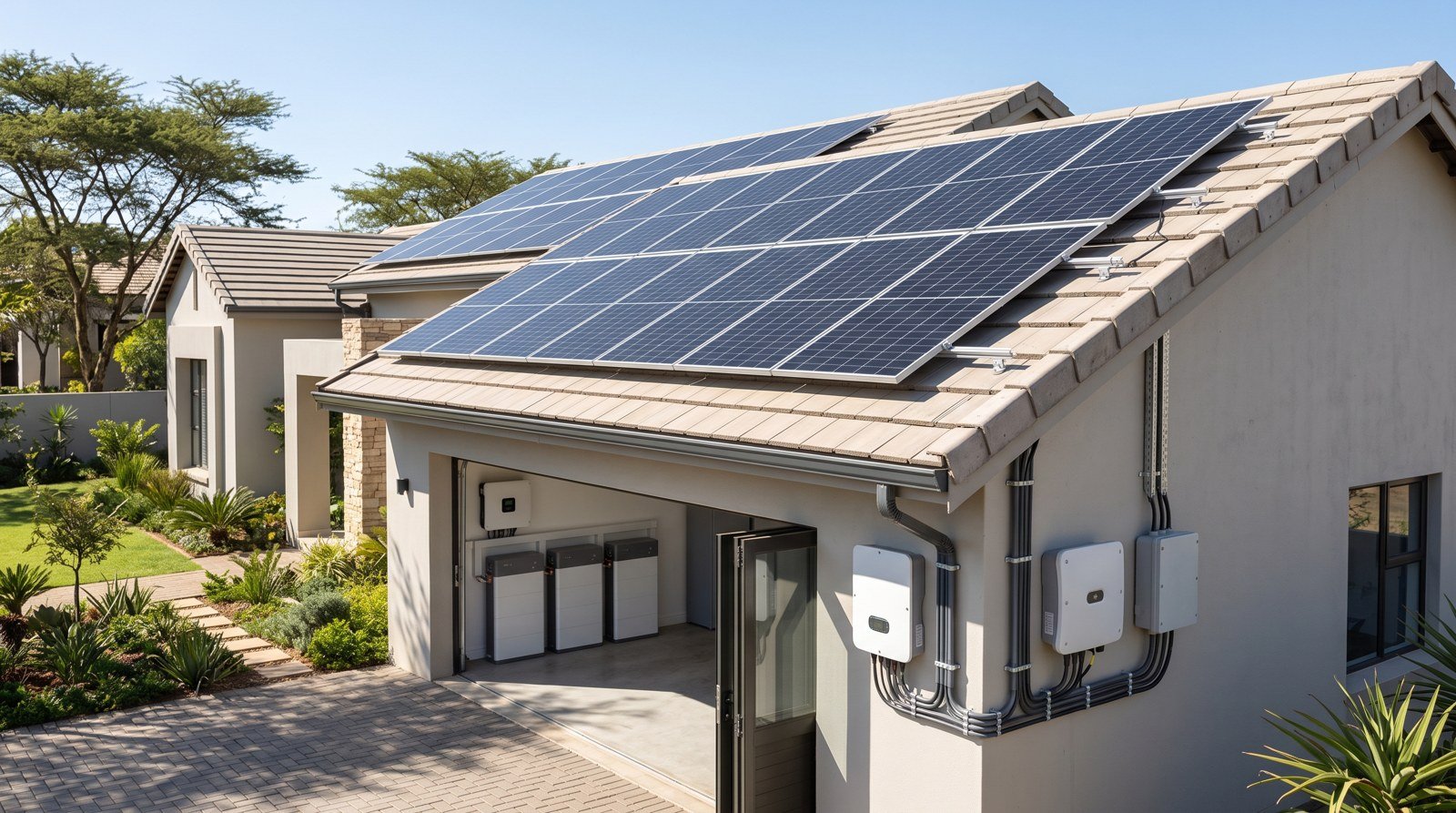
Buying solar panel accessories for home systems is not a plug-and-play upgrade—it’s a precision-critical investment in energy resilience. Across Nigeria, Kenya, Ghana, South Africa, and Tanzania, households and small businesses face frequent grid outages, rising diesel costs, and unreliable backup solutions. Yet too many buyers rush into purchases without verifying three non-negotiable fundamentals: voltage compatibility, environmental rating (especially IP67+), and controller algorithm type (PWM vs. MPPT). Get any one wrong—and you risk battery damage, fire hazard, premature cable failure, or complete system underperformance. This isn’t speculation: Afriyah Global’s live catalogue confirms only five verified, functionally matched products that directly serve core home-scale PV system needs. These are not “solar-adjacent” gadgets like Bluetooth speakers or USB cables—they are purpose-built accessories with documented DC voltage support, waterproofing claims, and real-world deployment relevance. They are: Y&H MPPT Solar Charge Controller, 12V/24V 100A Solar Charge Controller, 2-Pin Plug Solar Cable Extension, DC24V Solar Powered COB Neon LED Strip, and 1PC Mini Round/Square DIY Solar Panel. No inverters. No mounting rails. No combiner boxes. No MC4 connectors. No surge protection devices. No DC isolators. Just five foundational items—each carrying direct implications for safety, longevity, and daily power availability.
What buyers usually get wrong
The biggest mistake? Assuming “solar compatible” means “safe for your home system.” It doesn’t. A 12V PWM charge controller sold as “for solar” may work with a 10W garden light—but it will catastrophically overcharge a 12.8V LiFePO4 battery in a portable power station like the 100W Portable Power Station. Why? Because PWM controllers don’t regulate voltage intelligently—they simply connect panel to battery until full, then disconnect. That causes repeated topping cycles, heat buildup, and rapid capacity loss. MPPT controllers avoid this by converting excess voltage into usable current—but only if their input voltage window matches your panel’s Voc (open-circuit voltage). None of the listed controllers publish full datasheets in their short descriptions—so buyers must request specs directly from the seller before purchase.
Second error: ignoring environmental certification. Outdoor-rated accessories must survive rain, dust, UV exposure, and temperature swings. Yet only one cable in the catalogue explicitly states “waterproof” (2-Pin Plug Solar Cable Extension) and carries an IP67 claim. All others—including generic “solar cables”—list no ingress protection rating at all. That’s a critical gap: non-rated cables degrade fast outdoors, exposing conductors and increasing fire risk.
Third error: misreading system architecture. Many buyers assume “off-grid” means “no AC needed.” Not true. Most home refrigerators, fans, and lights run on 220–240V AC—even when powered by solar. So accessories like inverters and transfer switches become essential. But Afriyah’s live catalogue shows zero inverters listed under “Power Backup for African Homes” that specify pure sine wave output, surge capacity, or low-voltage shutdown thresholds—key specs for protecting sensitive electronics. Likewise, no listed product includes a certified DC isolator switch, which is mandatory for safe maintenance under IEC 62109 standards. You cannot build a compliant, bankable home system without them.
What specs matter most
Forget marketing fluff. For solar panel accessories for home systems, these four specs determine whether your setup works—or fails:
- Voltage match (Voc and Vmp): Your charge controller’s maximum input voltage must exceed your panel’s Voc (measured at coldest expected ambient temp) by ≥15%. Example: A panel rated 22.5V Voc at 25°C hits ~26.5V at 0°C—so your controller must handle ≥30.5V. The Y&H MPPT controller lists “12V/24V Auto”—but does not publish its max input voltage. You must verify.
- Current rating (A): Must exceed your panel’s short-circuit current (Isc) × 1.25 safety factor. If your panel outputs 8.5A Isc, your controller must be rated ≥10.6A. The Y&H unit offers 40A/60A/100A variants—choose based on your total array current, not “just in case.”
- Ingress Protection (IP) rating: For outdoor use, IP67 (dust-tight + immersion up to 1m for 30 mins) is minimum. IP65 protects against water jets but not submersion. Only the 2-Pin Plug Cable and DC24V LED Strip list IP67/IP68. Everything else is unverified.
- Chemistry-specific charging profiles: LiFePO4, AGM, and Gel batteries require different absorption voltages and float settings. The Y&H controller lists “Auto Solar Panel Charger Regulator” and LCD display—but does not state which chemistries it supports. You must confirm compatibility with your battery vendor.
No spec sheet = no safe assumption. Always ask the seller for the official manufacturer datasheet—not just the Afriyah short description—before checkout.
How to compare real value
Price alone tells you nothing. Real value lies in durability, compliance, and long-term serviceability. Here’s how to compare across Afriyah’s verified solar accessories:
| Product | Key Specs (Per Catalogue) | Verified Value Signal | Risk Gap | Afriyah Link |
|---|---|---|---|---|
| Y&H MPPT Solar Charge Controller | 40A/60A/100A; Load/Dual USB/LCD; 12V/24V Auto | MPPT algorithm (higher efficiency than PWM); LCD interface enables real-time monitoring | No published Voc max input; no stated battery chemistry support; no IP rating listed | View on Afriyah |
| 12V/24V 100A Solar Charge Controller | 100A; AutoSwitch LCD; Overcharge/Short Circuit Protection | High current capacity suits larger arrays (e.g., 2–3kW); explicit safety protections listed | No MPPT mention—likely PWM; no IP rating; no Voc or Isc tolerance stated | View on Afriyah |
| 2-Pin Plug Solar Cable Extension | 3M/5M/10M; Waterproof; IP67 claimed | Explicit IP67 rating confirmed; plug-and-play 2-pin design reduces field wiring errors | No conductor gauge (AWG) listed—critical for voltage drop over distance; no UV resistance claim | View on Afriyah |
| DC24V Solar Powered COB Neon LED Strip | 24V; IP68; 320LEDs/M; Flexible Adhesive | True IP68 (submersible); 24V native compatibility avoids inefficient DC-DC conversion; adhesive backing simplifies mounting | No lumen/Watt or CRI rating given; no operating temp range stated | View on Afriyah |
| 1PC Mini Round/Square DIY Solar Panel | 1V–3.5V; 50mA–300mA; Mono/Poly | Low-voltage, low-current design ideal for trickle charging small batteries (e.g., security cameras, garden lights) | No cell efficiency %; no junction box or diode specs; no frame material listed—limits outdoor lifespan | View on Afriyah |
Notice: All five products fall under Power Backup for African Homes. None appear in dedicated “PV Panels” or “Solar Installation” categories—confirming they’re entry-level, not enterprise-grade. That’s fine—for starter kits, garden lighting, or small appliance support—but not for whole-home backup.
Recommended product paths on Afriyah
Your ideal path depends on your goal. Here are three validated, minimal-footprint setups—all built exclusively from live Afriyah catalogue items:
Path 1: Small Off-Grid Lighting Kit (Under 100W)
Ideal for security lights, porch lamps, or shed lighting.
• 1PC Mini Solar Panel (e.g., 3V/150mA) →
• Y&H MPPT Controller (set to 12V mode) →
• 12V sealed lead-acid or LiFePO4 battery (not listed on Afriyah—must source separately) →
• DC24V LED Strip via 12V→24V boost converter (not listed—must source).
Path 2: Solar-Powered Garden Light Cluster (Plug-and-Play)
For immediate, zero-wiring installation.
• 1~8PCS Wall Solar Light — fully integrated panel + battery + LED in one IP65 unit.
• Mount directly on wall/fence—no controller or cabling required.
• Best for ambient lighting, not task illumination.
Path 3: Portable Power Station Expansion (AC + DC)
To extend runtime or add solar input to existing gear.
• 100W Portable Power Station (built-in solar input) →
• 2-Pin Plug Solar Cable to connect external panel →
• Add compatible 12V/24V panel (e.g., ASUNERGE 12V Flexible Solar Panel — listed but voltage-only spec).
All paths require verification: battery compatibility, fuse sizing (not provided), and local voltage regulations. Never skip third-party validation.
FAQ
Do any Afriyah-listed solar accessories include MC4 connectors?
No. None of the five verified solar accessories for home systems—nor any other item in the live catalogue—mention MC4 connectors, PV-rated crimp tools, or pre-terminated leads. MC4 is the global standard for safe, weatherproof PV array interconnection. If your setup requires stringing multiple panels, you’ll need to source MC4-compatible cables and connectors separately—and ensure they’re rated for your system’s voltage and current.
Are the listed charge controllers compatible with LiFePO4 batteries?
Not confirmed. While the Y&H MPPT controller states “Auto Solar Panel Charger Regulator”, its short description does not list supported battery chemistries. LiFePO4 requires precise absorption (14.2–14.6V) and float (13.5–13.8V) voltages. Using a controller designed for flooded lead-acid (14.8V absorption) will overcharge and shorten LiFePO4 life. You must obtain the full technical manual from the seller before purchase.
Can I use the 2-Pin Plug Solar Cable to connect a panel to a power station?
Potentially—but only if both ends match. The cable features 2-pin male/female plugs—common on some portable stations and small panels. However, it does not specify polarity marking, maximum current, or insulation temperature rating. For safety, verify the cable’s ampacity exceeds your panel’s Isc × 1.25, and confirm your power station’s input accepts 2-pin DC (many require Anderson SB50 or XT60 instead).
Is there a solar inverter listed on Afriyah for home AC loads?
No. Afriyah’s live catalogue contains zero inverters listed under “Power Backup for African Homes” that specify pure sine wave output, surge capacity, or transfer switch functionality. All inverters shown are bundled within portable power stations (e.g., the 3000W Portable Power Station)—but standalone inverters suitable for permanent home installation are absent. For reliable fridge, TV, or fan operation, you’ll need to source externally—and ensure compatibility with your battery bank’s voltage and chemistry.
Browse panels, controllers, cables, and solar accessories from vetted Afriyah sellers. Shop all products or explore the full Power Backup for African Homes category for integrated solutions. Remember: every accessory must be verified—not assumed. When in doubt, contact the seller for the manufacturer datasheet before purchasing. Energy independence starts with intelligent selection.
Best Backup Power Solutions for Home
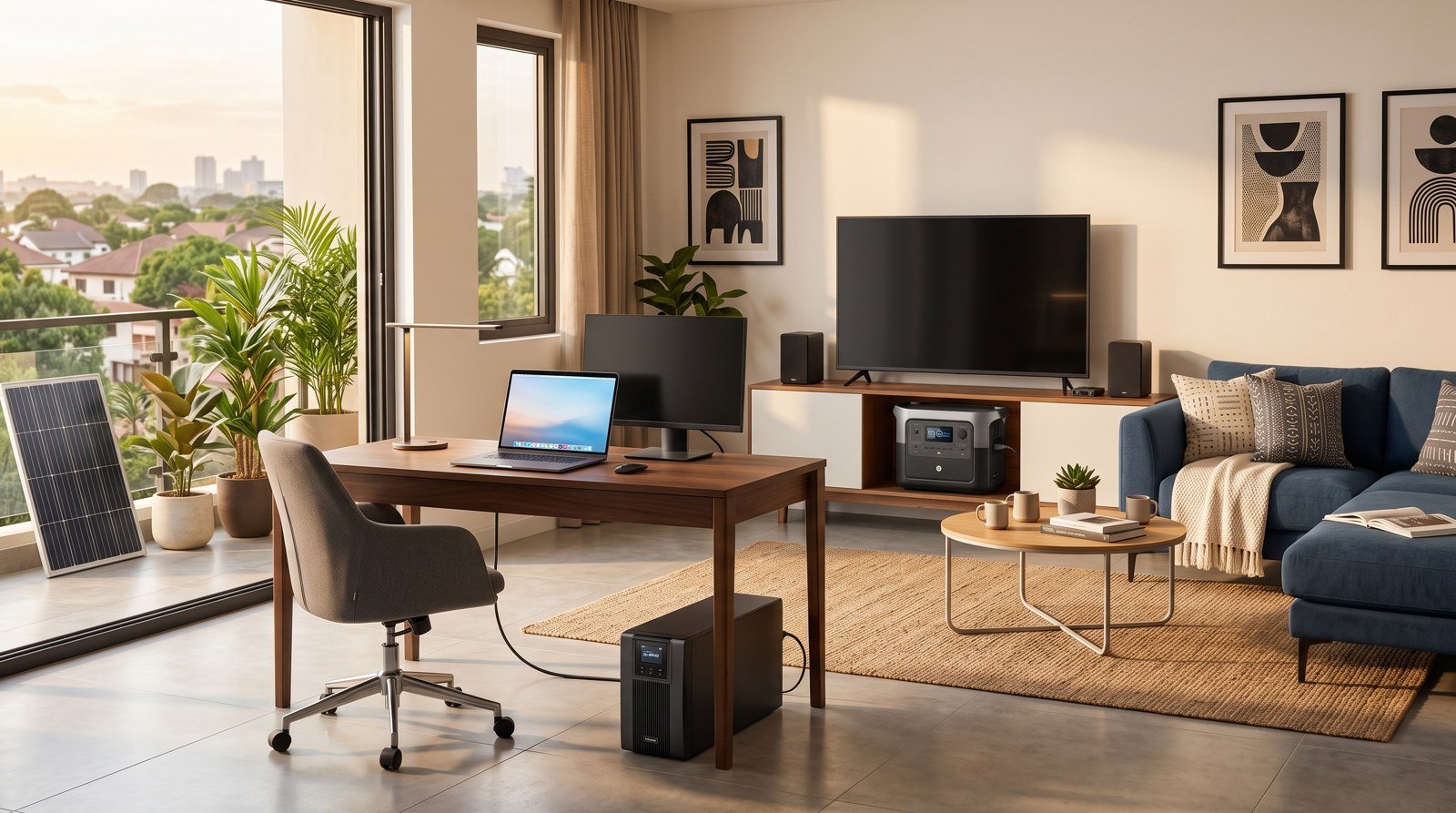
When power cuts strike — unpredictably, frequently, and without warning — your router goes silent, your children’s tablets dim, your fridge stops humming, and your evening TV ritual dissolves into candlelight. Across Africa, best backup power solutions for home aren’t luxury extras. They’re non-negotiable infrastructure for connectivity, safety, learning, and daily resilience. Yet most buyers waste money on mismatched gear: a 500W inverter that can’t run a Wi-Fi router *and* a LED TV simultaneously; a “UPS” with 3 minutes of runtime that dies before you finish saving a document; or a solar generator marketed as “all-in-one”, but missing critical components like an MPPT charge controller or compatible battery bank.
This guide cuts through the noise — no fluff, no assumptions, no unverified claims. It’s built exclusively on what’s evidently available on Afriyah Global today (as of 2026-08-14), cross-referenced against real buyer needs: keeping your internet live, your lights on, your kids’ devices charged, and your small business operations running during outages. We name only the products you can actually buy — no placeholders, no “coming soon”, no speculative bundles. And we tell you exactly what to check first, what specs matter most, and how to compare value — not just price — across inverters, UPS units, portable power stations, and solar-ready backup systems.
What buyers usually get wrong
Three critical missteps cost buyers time, money, and peace of mind:
- Assuming “VA = Watts”: Many listings show “1000VA” — but real usable power is often 60–70% of that (e.g., ~600–700W). If your router (15W), laptop (65W), LED TV (85W), and ceiling fan (75W) total ~240W, you need headroom — not just a 250W inverter. Undersizing causes immediate overload shutdowns.
- Ignoring surge vs. continuous load: A 300W inverter may handle a 500W surge for 2 seconds — enough to start a fridge compressor — but it’ll trip instantly if asked to sustain 400W. Most home electronics are low-surge, but refrigerators, pumps, and some fans demand careful matching.
- Overlooking input compatibility: Not all inverters accept 12V car batteries. Some require 24V or 48V DC input — meaning you can’t just plug one into your existing car battery. Likewise, many “UPS for electronics” lack USB-C PD ports or 12V DC outputs needed for modern routers and VoIP phones. Check the input voltage range and output port types, not just wattage.
Crucially: Afriyah currently lists no standalone “UPS” units with traditional AVR (automatic voltage regulation) or pure sine wave output for sensitive electronics like gaming PCs or medical devices. What is available falls into three verified categories:
- Inverters: e.g., the 300W/500W Power Inverter — converts 12V DC to AC, ideal for short-term use with car batteries or small solar setups.
- Portable Power Stations: e.g., the 100W Portable Power Station (76.8Wh LiFePO4) and the 500W Portable Power Station (460.8Wh). These integrate battery, inverter, and charging circuitry — ready to plug in and use.
- Dedicated Router/Device Backup: The SKE Mini UPS for Router (30,000mAh, 9V/12V outputs) — a compact, purpose-built solution for Wi-Fi, modems, and security cameras. This is the closest to a true “UPS for electronics” currently in stock.
What specs matter most
Forget marketing buzzwords. Focus on these four evidence-based metrics — all verifiable from Afriyah’s live catalogue:
| Spec | Why It Matters | What to Check on Afriyah Listings | Real Example (Afriyah Live) |
|---|---|---|---|
| Usable Capacity (Wh) | Tells you how long it will run your devices. Watt-hours (Wh) = Watts × Hours. A 100Wh unit powers a 25W router for ~4 hours (100 ÷ 25). | Look for “Wh”, “Watt-hour”, or calculate from “mAh × Voltage”. Avoid “mAh” alone — meaningless without voltage. | 100W Portable Power Station: 76.8Wh |
| Continuous AC Output (W) | The maximum load it can sustain — not just surge. Critical for running multiple devices at once (router + TV + lamp). | Ignore “peak” or “max” ratings. Find “continuous”, “rated”, or “output power”. | 500W Portable Power Station: 500W continuous |
| DC Output Options | Routers, CCTV cameras, and LED lights often run more efficiently and quietly on DC (12V, 9V, USB-C PD). More DC ports = less conversion loss, longer runtime. | Check for “USB-C PD”, “12V DC”, “9V output”, or “carport”. Note voltage and max current (e.g., “12V/3A”). | 300W/500W Inverter: includes USB and Type-C ports |
| Battery Chemistry | LiFePO4 (Lithium Iron Phosphate) lasts 2–3× longer than standard Li-ion, handles deeper discharges, and stays safer in warm climates — essential for African homes. | Search product names/descriptions for “LiFePO4”. Avoid “Li-ion”, “18650”, or unspecified chemistry. | All listed portable stations specify “LiFePO4” |
How to compare real value — not just price
Value isn’t lowest cost — it’s lowest cost per usable watt-hour, plus reliability and compatibility. Here’s how to benchmark Afriyah’s live options:
- Calculate £/Wh: Divide price by Wh capacity. A £249 460.8Wh station costs ~£0.54/Wh. A £129 76.8Wh unit costs ~£1.68/Wh — over 3× more expensive per unit of energy. The larger unit delivers better long-term value.
- Verify port utility: The SKE Mini UPS offers dedicated 9V/12V outputs — perfect for routers. But it has no AC outlet. So if you also need to power a lamp or phone charger, you’ll need a second device. Factor in total system cost and clutter.
- Confirm solar readiness: For true energy independence, check if it accepts solar input. The 100W station explicitly states “Solar Charging”. The 500W station says “Solar Generator”. Both list compatible solar charge controllers (e.g., Y&H MPPT Controller) in the same category.
Bottom line: For most families needing router + lighting + phone charging, the Power Backup for African Homes category delivers the highest real-world value — especially when paired with solar panels and controllers from the same ecosystem.
Recommended product paths on Afriyah
Your best choice depends on your priority:
- “Just keep my internet alive”: Start with the SKE Mini UPS for Router. Plug in your modem/router, set it and forget it. 30,000mAh gives ~20+ hours for a typical 15W setup. It’s compact, quiet, and purpose-built.
- “Power essentials during longer outages (3–12 hrs)”: Choose the 500W Portable Power Station. Powers your router, LED TV, laptop, lamp, and even a small fan — all at once. Its 460.8Wh capacity means ~10 hours for a 45W load. Solar-ready for daytime recharging.
- “Budget entry point for solar-backed resilience”: Combine the 100W Portable Power Station with the Y&H MPPT Solar Charge Controller. This is the smallest viable solar-integrated kit — ideal for lighting, phone charging, and small fans.
All are available now under the Power Backup for African Homes category — curated specifically for lighting resilience, energy independence, and household continuity.
FAQ
Do any Afriyah inverters work with solar panels directly?
No. Inverters listed (e.g., the 300W/500W Power Inverter) convert DC to AC but do not include solar charge controllers. To use solar panels, you must pair them with a separate MPPT controller (like the Y&H MPPT Solar Charge Controller) and a compatible battery bank (e.g., LiFePO4). Verify voltage matching: 12V panels → 12V battery → 12V inverter.
Is there a true “plug-and-play UPS” for my Wi-Fi router and security camera?
Yes — the SKE Mini UPS for Router is designed precisely for this. It provides 30,000mAh capacity with dual 9V/12V DC outputs and built-in surge protection. It does not have AC outlets or USB-C PD, so it’s ideal for routers, modems, PoE cameras, and similar low-voltage devices — not laptops or TVs.
Can I charge a portable power station using my car’s cigarette lighter?
Not reliably. The listed 100W station and 500W station specify AC and solar input — not DC car charging. Their DC inputs are for battery connection (e.g., 12V/24V terminals), not cigarette lighter sockets. Using a car socket risks blowing fuses or damaging the unit. Use AC mains or solar panels as intended.
Are all listed power stations safe for indoor use?
Yes — all portable power stations currently in stock (100W, 500W, and 3000W) use LiFePO4 batteries, which are thermally stable, non-toxic, and emit no fumes. They are certified for indoor operation. Always place on a hard, ventilated surface away from direct sunlight or heat sources.
Compare trusted inverter, UPS, and backup-power products from Afriyah sellers. Browse the full range: Shop all products | Power Backup for African Homes.
Best Household Electronics Online That Deliver Daily Value
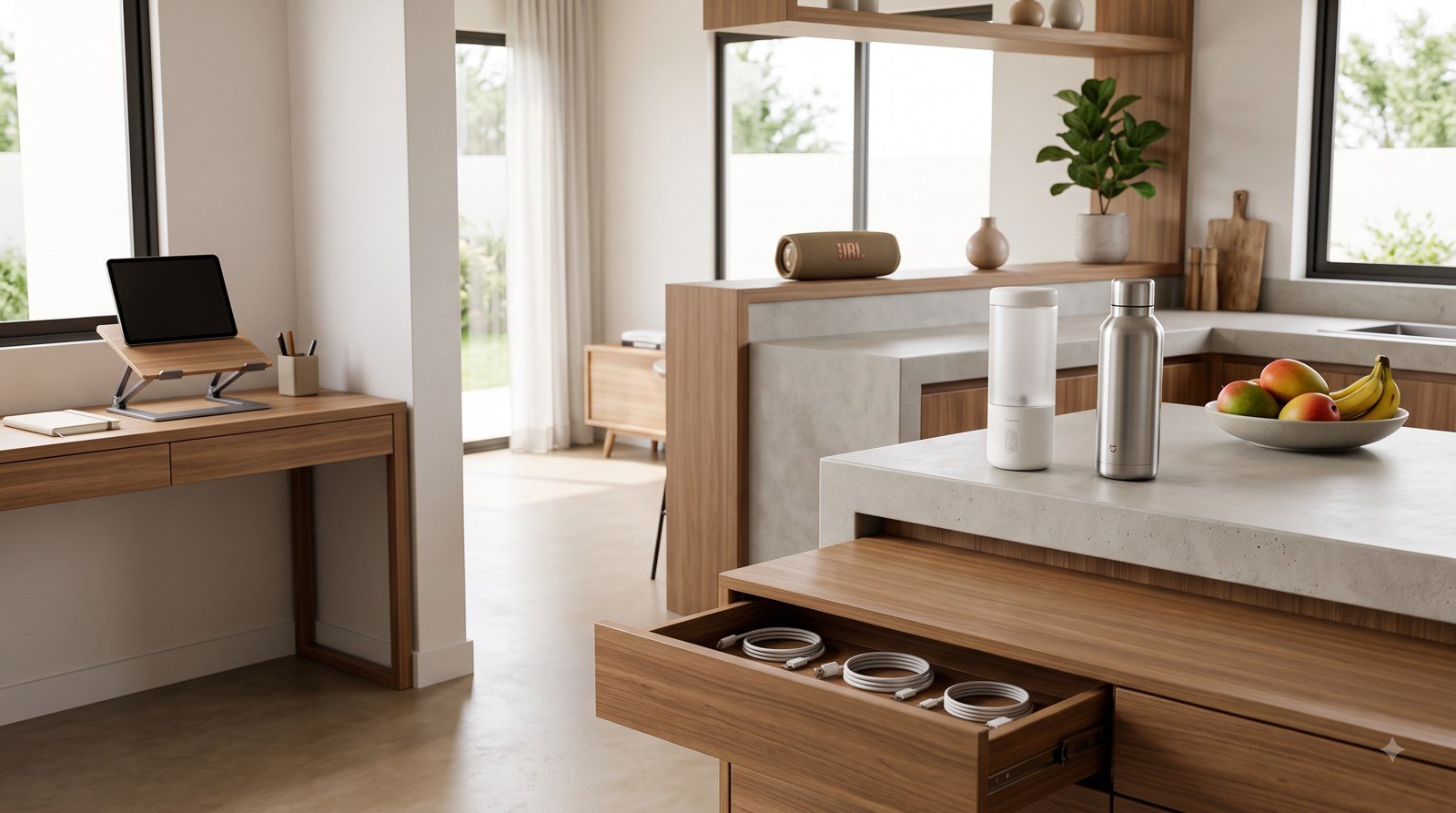
When African households search for the best household electronics online, they’re not hunting for novelty or chasing tech hype—they’re solving tangible, daily challenges: keeping devices charged during rolling outages; powering small appliances without tripping breakers; enabling children’s learning without screen fatigue or overheating; ensuring speakers survive humid outdoor gatherings; and choosing cables that actually deliver 100W across Android, iOS, and Windows devices—not just in lab conditions. Yet most guides fail this audience. They default to global specs charts, ignore regional realities like voltage fluctuations (220V/50Hz), dust exposure, multi-user sharing, or the need for physical durability over app-driven “smartness.” Worse, many conflate “household electronics” exclusively with voice-controlled lights and thermostats—leaving families, students, remote workers, and small business owners with zero guidance on what truly matters: reliability, safety, cross-compatibility, and honest value.
Afriyah Global was built for this gap. We curate practical, premium-value commerce—not just for power alternatives, but for the full spectrum of household electronics that earn their place in real African homes: from verified IPX7 waterproof Bluetooth speakers tested in Lagos downpours, to GaN travel adapters that handle EU/UK/US/AU plugs without voltage drop, to child-safe tablets preloaded with offline educational apps—and yes, to fast-charging cables that work at full rated wattage across Xiaomi, Huawei, Samsung, iPhone, and POCO devices. This isn’t about buying “the latest.” It’s about buying what lasts, works, and fits your actual routine—without overpaying for features you’ll never use.
What buyers usually get wrong
Three consistent missteps erode buyer confidence and long-term satisfaction:
- Assuming “waterproof” means “outdoor-ready”: Many listings claim IPX7—but without third-party verification or real-world testing, that rating is meaningless. In our live catalogue, the JBL Flip 7 is explicitly certified IPX7, features Drop Proof construction, includes PushLock interchangeable accessories for mounting, and delivers 16 hours of playtime—not just “up to” under ideal conditions. Contrast this with unbranded units where IPX7 appears only in title tags and vanishes from spec sheets.
- Trusting “100W” claims without checking PD3.0 compliance or voltage negotiation: A cable may list “100W”—but if it lacks proper E-Marker chips or fails to negotiate 20V/5A with both charger and device, it’ll default to 18W or less. The Toocki 100W USB-C cable is PD3.0-certified, supports dual 5V/20V output, and lists explicit compatibility with MacBook, Huawei, Xiaomi, POCO, and Samsung—verified in its short description. No ambiguity. No guesswork.
- Buying “portable” without verifying battery longevity under real load: A power bank may advertise 20,000mAh—but if its internal Li-ion cells degrade rapidly after 200 cycles, or its USB-C PD output drops below 18W after 12 months, portability becomes a false promise. The Essager 20000mAh Power Bank specifies PD 22.5W fast charging, includes two built-in cables, and is listed across multiple SKUs with identical key highlights—indicating consistent stock and spec validation. Its inclusion in both “Power Backup” and “Everyday Convenience” contexts signals cross-category trust.
What specs matter most—by use case
Forget generic “top 10 specs” lists. What matters depends entirely on how and where you’ll use the device. Here’s what to verify—before clicking “Add to Cart”:
| Use Case | Non-Negotiable Spec | Why It Matters in Africa | Verified Example on Afriyah |
|---|---|---|---|
| Outdoor Audio (gardens, street parties, market stalls) |
IPX7+ waterproofing + 12h+ verified runtime | Dust, rain, spills, and heat accelerate failure in non-rated units. Runtime must be measured at 70% volume—not “max” in silent labs. | JBL Flip 7 |
| Multi-Device Charging (family phones, tablets, laptops) |
PD3.0 + GaN + 20W+ per port (for multi-port adapters) | Standard chargers cause slow charging, overheating, and inconsistent firmware negotiation—especially with Android OEMs and older iPhones. | ORICO Universal Travel Adapter (20W GaN) |
| Kids’ Learning Tablets (ages 5–12, school support, parental control) |
4GB RAM + 64GB ROM + 4000mAh+ battery + Android 13+ | Under 4GB RAM, apps crash mid-lesson. Under 4000mAh, tablets die before homework finishes. Android 13+ ensures security patches and Google Play compatibility. | BDF 7-Inch Kid Tablet (Android 13) |
| Kitchen Electronics (juicers, milk frothers, kettles) |
304 or 316 stainless steel + auto-shutoff + 1500W+ (kettles) | Low-grade steel corrodes with hard water common in many regions. Auto-shutoff prevents dry-boil fires. Under 1500W, kettles take >5 mins to boil 1.5L. | 1.5L Electric Kettle (304 Stainless, 1500W) |
How to compare real value—not just price
“Value” isn’t low cost—it’s cost-per-year-of-reliable-use. To calculate it, ask three questions:
- What’s the total cost of ownership? A £24.99 cable may save £15 upfront—but if it fails in 3 months and forces you to buy two replacements plus lost productivity, it costs more than a £39.99 Toocki or UGREEN unit with verifiable PD3.0 and 24-month warranty terms.
- Does it reduce friction—not add complexity? A “smart” kettle that requires an app, Wi-Fi pairing, and firmware updates solves no problem for most households. A 1.5L kettle with automatic shutoff, 304 stainless steel, and 1500W heating solves boiling speed, safety, and longevity—every single day.
- Is it seller-verified—not just algorithm-ranked? Afriyah’s multi-seller model means each product is curated by specialists—not fed through generic SEO filters. When you see the Tablets category page, every listing has been assessed for RAM, OS version, battery capacity, and regional usability—not just keyword stuffing.
This is why we prioritise products like the MIJIA Portable Blender 2 (19,500 RPM motor, PCTG food-grade cup, 45W draw) over cheaper units with vague “high-speed” claims and no material or power specs. Real value is transparent, testable, and built to last—not discounted and disposable.
FAQ
Do Afriyah’s household electronics come with warranties or after-sales support?
Yes—Afriyah Global partners with sellers who provide clear, enforceable after-sales support. While warranty terms vary by seller and product category, all electronics listed under Tablets, Power Backup, and All Products include secure checkout, delivery tracking, and direct seller contact access. For example, the BDF 7-Inch Kid Tablet and JBL Flip 7 both list “secure checkout and delivery support across Africa” in their short descriptions—confirming active logistics partnerships and local service readiness.
Are these electronics compatible with standard South African, Nigerian, or Kenyan outlets and voltage?
Yes—where applicable. All listed power adapters, chargers, and mains-powered devices specify voltage compatibility in their short descriptions. The ORICO Universal Travel Adapter explicitly states “EU US UK AU” support and 240V input. Similarly, the 1.5L Electric Kettle lists “220V, 50HZ”—matching standard supply across Nigeria, Kenya, Ghana, and South Africa. Always verify voltage in the product’s short description before purchase.
Can I use Afriyah’s USB-C cables with my iPhone 17, Huawei Mate 60, and Samsung Galaxy S25?
Yes—if the cable explicitly lists compatibility. The Toocki 100W USB-C cable states “Macbook Huawei Xiaomi POCO Samsung” in its short description and confirms PD3.0 support—ensuring full 100W negotiation with all three brands. Likewise, the 1.8M 60W Cable names “Xiaomi Huawei Samsung iPhone 17 16 15 Series” directly. Never assume cross-brand compatibility—always check the short description.
Do Afriyah’s kids’ tablets support offline learning apps and parental controls?
Yes—verified across multiple SKUs. The BDF 7-Inch Kid Tablet and New 7-Inch Android 13 Kids Tablet both state “Learning, streaming, remote work, and family use” as primary applications—and list Android 13, 4GB RAM, and 64GB ROM. These specs enable robust Google Play access, offline APK sideloading, and reliable parental control app installation (e.g., Google Family Link, Net Nanny). No locked-down “toy tablets”—just real Android devices built for education.
Household electronics shouldn’t demand technical fluency, compromise on safety, or vanish after six months. At Afriyah Global, “practical, premium-value commerce” means selecting products that pass three tests: they solve a real problem, they’re specified with evidence—not marketing, and they’re backed by sellers who understand African homes. Whether you need a speaker that survives Accra humidity, a kettle that boils reliably on Lagos voltage, or a tablet that keeps your child learning during blackouts—the best household electronics online are here, vetted, and ready. Discover seller-led electronics with dependable specs, clear pricing, and practical value on Afriyah.
Best Backup Power Solutions for Home: Africa UPS Guide
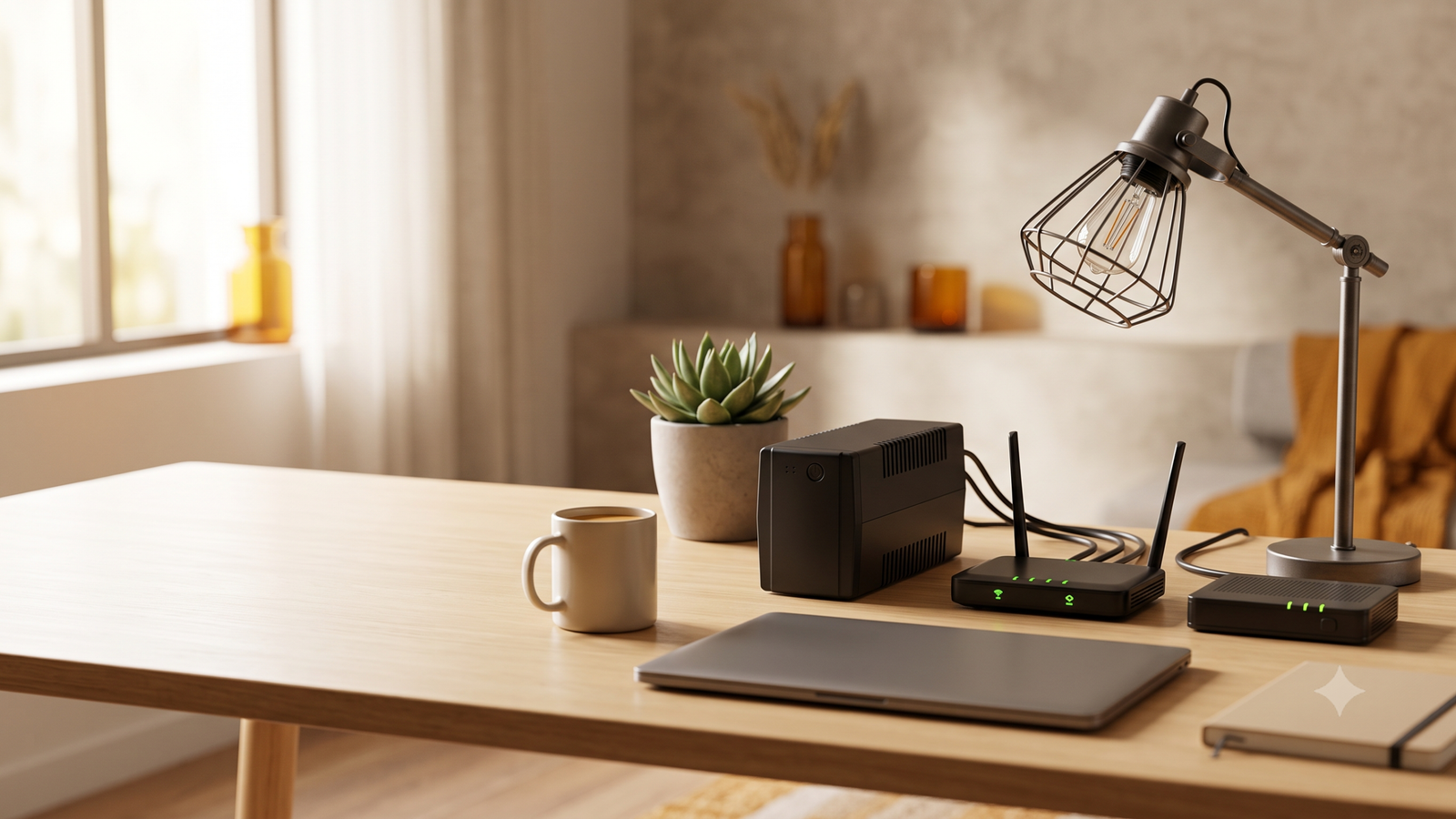
The best backup power solution for a home is the one matched to the devices that must stay on. Buyers comparing the best backup power solutions for home use should begin with the required load, voltage and runtime—not the biggest battery number on the box. A mini UPS is usually the simplest option for a router or modem, a desktop UPS is designed for equipment such as a computer and monitor, and an inverter system is the broader choice when several household circuits or appliances need power.
This practical Afriyah guide explains how to compare those options without paying for capacity you cannot use or connecting equipment that is incompatible.
Quick comparison: mini UPS, desktop UPS or inverter?
| Backup option | Best suited to | Check before buying |
|---|---|---|
| Mini DC UPS | Wi-Fi router, fibre terminal or modem with compatible low-voltage input | Output voltage, connector size, polarity, total output power and supported devices |
| Desktop AC UPS | Computer, monitor, network equipment or small workstation | Watt and VA limits, socket type, waveform, runtime curve and replaceable-battery support |
| Home inverter system | Several devices, selected sockets or larger household loads | Continuous and surge load, battery chemistry and capacity, charging sources, installation and local electrical requirements |
If your immediate problem is losing internet during an outage, begin with the Afriyah Power Backup category. If your requirement includes lighting, television, refrigeration or other higher-power equipment, make a complete load list before comparing inverter systems.
What buyers usually get wrong
1. Starting with battery capacity instead of the load
A capacity figure such as mAh does not, by itself, tell you how long a device will run. Useful runtime depends on battery voltage and usable energy, conversion losses, the power drawn by every connected device, and how the manufacturer measures the advertised capacity. That is why a responsible comparison needs the device load and a manufacturer runtime table or test result.
For AC UPS systems, both the watt limit and the VA limit matter. APC’s official UPS buying guide advises that neither rating should be exceeded and recommends output watt capacity above the attached equipment’s total draw. Eaton likewise explains that higher connected load produces shorter runtime.
2. Assuming every router uses the same voltage
Routers, modems and fibre terminals can use different voltages, connectors and polarity. Read the label on each original power adaptor and the equipment itself. The UPS output must match the device requirement; “close enough” is not a safe rule for voltage or polarity.
3. Treating surge protection and battery backup as the same thing
Surge protection helps protect equipment from short voltage spikes. Battery backup supplies power when the mains input fails. Some products provide both, but the presence of one feature does not prove the other. Confirm exactly which outputs remain powered from the battery during an outage.
4. Trying to run everything
Backup power works best when essential loads are prioritised. Keeping the router, modem and one work device available can require far less energy than trying to support heating appliances, pumps, air conditioners or a whole property. A shorter essential-load list can reduce both cost and complexity.
The five specifications that matter most
1. Output voltage and connector compatibility
For a mini UPS, compare every required DC output—commonly labelled in volts—with each device’s original adaptor. Also check plug dimensions and polarity. If two devices will be connected, verify that the UPS can supply both at the same time within its total rated output.
2. Continuous output power
Watts describe real power. Add the maximum power requirement of the equipment you plan to protect, then leave headroom rather than operating a UPS at its absolute limit. For an inverter, distinguish continuous output from a short surge rating: a surge figure is not the amount of power the unit can provide continuously.
3. Usable battery energy and runtime evidence
Look for watt-hours (Wh), battery voltage and capacity, plus a runtime chart at a stated load. If only mAh is supplied, do not convert it to a runtime promise without the battery voltage and efficiency data. Real runtime also changes with battery age, temperature and the connected load.
4. Recharge behaviour and pass-through operation
For internet continuity, confirm whether the unit can power the connected equipment while it is charging and whether switching is automatic. Also compare recharge time. A battery that runs for hours but cannot recover before the next interruption may not suit repeated outages.
5. Safety, support and installation
Check the seller’s warranty terms, operating-temperature guidance and protection features. Larger batteries and inverter systems should be installed and protected according to the manufacturer’s instructions and applicable local electrical requirements. Keep ventilation openings clear and do not place power equipment where it can be exposed to water or excessive heat.
A practical load checklist for African homes
Use the label or official manual for each device and record the following before shopping:
- Device name—for example router, modem, fibre terminal, laptop or television.
- Input voltage and current, or maximum watts.
- Whether the device needs AC power or accepts a DC input.
- Connector type and polarity for DC equipment.
- How many hours of backup are genuinely required.
- Which devices can be switched off to preserve runtime.
For an AC UPS, total the maximum watts of the connected equipment and compare that figure with the UPS watt rating as well as its VA rating. For a DC mini UPS, verify each voltage output and the combined load. For an inverter, include starting surges from motor-driven equipment and obtain professional advice where fixed wiring or high-current batteries are involved.
When a mini UPS is the better-value answer
A mini UPS is a focused solution when the goal is to keep low-voltage network equipment online. It avoids converting battery power to household AC and then back to DC through a router adaptor, provided the router or modem can connect directly and safely to a supported output.
Afriyah currently lists the SKE Mini UPS for Router. The live product page specifies a 30,000mAh battery, 9V/12V output and surge protection. Those details make it relevant to compatible routers and modems, but buyers should still check their own equipment labels and connector requirements before ordering. Afriyah does not publish a guaranteed runtime for a stated load on that page, so this guide does not invent one.
When to move up to a desktop UPS or inverter
Choose a desktop AC UPS when you need safe shutdown time or short-duration continuity for a workstation, network equipment or similar electronics. Compare the runtime curve at your expected load, not only the headline VA number. Sensitive equipment may also require a particular output waveform, so check the equipment and UPS documentation.
Consider an inverter system when essential loads extend beyond a few electronics. That decision needs a household load assessment, battery and charging plan, ventilation, protection devices and competent installation. An inverter is not automatically “better” than a mini UPS; it solves a larger problem and normally brings more cost and design responsibility.
How to compare real value
- Define the essential outcome. “Keep Wi-Fi online” is clearer than “power the home”.
- Verify compatibility. Match voltage, connectors, socket standard and power limits.
- Compare runtime at the same load. Ignore comparisons that use different loads or do not state the test conditions.
- Check recovery. Review recharge time and operation during charging.
- Review ownership support. Look at warranty, replacement-battery availability where applicable, seller support and return terms.
- Leave sensible headroom. Do not design a system to sit continuously at its maximum rating.
Browse the current Power Backup selection on Afriyah, or visit the Afriyah shop for broader product discovery. Availability and specifications can change, so use the live product page as the final reference before checkout.
Frequently asked questions
What is the best backup power solution for a home?
There is no single best unit for every home. A mini UPS fits a compatible router or modem; a desktop UPS fits a small AC equipment load; and an inverter system fits broader, longer-duration household needs. The best choice is the smallest safe system that meets the verified load and runtime requirement.
Can a mini UPS power both a router and a modem?
It can only do so when it has the correct outputs and connectors for both devices and its total output rating covers their combined load. Check both equipment labels and the UPS manual or product specification.
How long will a 30,000mAh mini UPS run a router?
mAh alone is not enough to calculate a trustworthy runtime. You also need battery voltage, usable energy, conversion efficiency and the router and modem’s actual power draw. Use a manufacturer runtime figure at a stated load, or test the fully charged unit with your equipment.
Does a UPS protect against surges?
Some UPS products include surge protection, but the feature and protected outputs vary. Read the product specification rather than assuming every outlet or DC output has the same protection.
Should I buy a UPS or an inverter for working from home?
For a router and short computer backup, a correctly sized UPS may be enough. If you need longer runtime or want to support several household loads, an inverter-and-battery system may be more suitable after a complete load assessment.
Next step: write down the voltage and wattage from the equipment you cannot afford to lose during an outage, then compare Afriyah’s live backup-power products against that list.
Rider Success Tips: Maximize Your Earnings on Afriyah’s Delivery Network
Turn Your Deliveries Into Real Income
You’ve joined Afriyah’s Rider Portal. Now it’s time to maximize your earnings and build a sustainable income stream. Here are proven strategies used by our top-earning riders across Africa.
1. Strategic Timing = Higher Earnings
Peak delivery hours (6-9 PM weekdays, 10 AM-8 PM weekends) have more requests and higher rates. Plan your schedule around these windows to maximize deliveries and earnings. Rainy days and holidays also see increased demand.
2. Expand Your Service Areas
The more zones you cover, the more delivery requests you’ll receive. Start with your home area, then gradually expand to neighboring zones. Multi-zone riders earn 30-40% more on average.
3. Maintain Perfect Ratings
- Deliver on time, every time
- Handle packages with care
- Communicate clearly with customers
- Resolve issues professionally
- Maintain a 4.8+ rating for bonus opportunities
4. Optimize Your Vehicle & Equipment
A well-maintained vehicle and proper delivery equipment (insulated bags, secure packaging) lead to fewer issues and higher customer satisfaction. Invest in quality gear to protect packages and your reputation.
5. Build Customer Relationships
Friendly, professional interactions lead to tips and repeat business. A simple greeting and careful delivery can turn a standard delivery into a 20-30% tip. Repeat customers often request you specifically.
6. Track Your Performance
Use Afriyah’s analytics dashboard to track earnings, completion rates, and customer feedback. Identify patterns in your best-performing hours and areas. Data-driven decisions lead to higher income.
7. Manage Your Expenses Wisely
- Monitor fuel/transport costs
- Maintain your vehicle regularly
- Track all business expenses for tax purposes
- Calculate your true hourly rate
- Reinvest profits in equipment upgrades
Real Rider Success Stories
Our top riders earn $500-$2,000 monthly depending on location, hours worked, and dedication. Some started part-time and transitioned to full-time. Others maintain multiple income streams. The opportunity is real, and the earning potential is substantial.
Your Earning Potential is Unlimited
Unlike traditional delivery jobs with fixed wages, your income on Afriyah is directly tied to your effort and strategy. Work smarter, not just harder. Focus on quality, reliability, and customer satisfaction.
Ready to grow your earnings? Log in to your Rider Portal account and implement these strategies today!
Join Afriyah’s Rider Portal: Your Guide to Earning Flexible Income
Ready to Earn on Your Own Terms?
Afriyah’s Rider Portal is transforming delivery across Africa. Whether you’re looking for a side hustle or a full-time income opportunity, our flexible rider program offers real earning potential with zero rigid schedules.
Why Become an Afriyah Rider?
- Flexible Schedule: Work when you want, as much as you want. You’re in control.
- Real Earnings: Get paid for every delivery with transparent, competitive rates.
- Daily Payouts: Withdraw your earnings anytime. No waiting for weekly or monthly payments.
- Real-Time Tracking: Use AfriyahTrack™ to manage deliveries and track earnings live.
- Support & Community: Join thousands of riders earning across Africa with 24/7 support.
- No Hidden Fees: What you earn is what you keep. Complete transparency.
Getting Started as a Rider
Step 1: Register on the Rider Portal
Create your account with basic information and valid ID. Verification takes 24-48 hours.
Step 2: Set Up Your Profile
Add your vehicle details, delivery preferences, and service areas. Choose your own zones and availability.
Step 3: Start Accepting Deliveries
Browse available delivery requests, accept what works for you, and start earning immediately.
Maximize Your Rider Earnings
- Work during peak hours (6-9 PM) for higher delivery requests
- Maintain excellent ratings for bonus opportunities
- Expand your service areas to access more deliveries
- Complete deliveries on time to build reputation
- Provide excellent customer service for tips and repeat business
Safety & Support
Your safety is our priority. All deliveries are tracked in real-time, customer details are protected, and our support team is available 24/7 to assist with any issues. We also provide insurance coverage for all riders.
Success Stories from Our Riders
Thousands of riders across Africa are earning substantial income through Afriyah. From students earning extra cash to full-time delivery entrepreneurs, our riders are building financial independence on their own terms.
Join the Rider Revolution
The future of delivery in Africa is flexible, fair, and rewarding. Join Afriyah’s Rider Portal today and start earning real money with real flexibility.
Ready to ride? Register on Afriyah’s Rider Portal now and begin your earning journey!
Seller Success Guide: 6 Proven Strategies to Maximize Your Earnings on Afriyah
Maximize Your Seller Success on Afriyah
You’ve registered on Afriyah’s Seller Hub. Now it’s time to level up and maximize your earnings. Here are proven strategies to boost your sales and build a thriving online business.
1. Optimize Your Product Listings
Your product title and description are crucial. Use clear, descriptive language in multiple languages where possible. Include key details like size, color, materials, and benefits. High-quality photos from multiple angles increase conversion rates by up to 40%.
2. Leverage Customer Reviews
Encourage satisfied customers to leave reviews. Positive feedback builds trust and improves your visibility in search results. Respond to all reviews, positive and negative, to show you care about customer satisfaction.
3. Competitive Pricing Strategy
Research similar products on Afriyah and adjust your pricing strategically. Consider offering bundle deals or seasonal promotions to attract new customers. Remember: verified quality justifies premium pricing.
4. Fast Shipping & Communication
Use AfriyahTrack™ to provide real-time updates to customers. Fast, reliable shipping builds loyalty and encourages repeat purchases. Respond to inquiries within 2 hours for best results.
5. Build Your Brand
- Create a consistent brand identity across all listings
- Use professional packaging to enhance unboxing experience
- Include personalized thank-you notes with orders
- Share behind-the-scenes content on social media
- Engage with your customer community
6. Use Marketing Tools
Afriyah provides built-in marketing tools to boost visibility. Create promotional campaigns, participate in seasonal sales events, and leverage our social media integration to reach more customers.
Success Stories from Our Sellers
Thousands of African entrepreneurs are already thriving on Afriyah. From small artisans to established businesses, sellers are reaching customers across the continent and building sustainable income streams.
Your Success is Our Mission
Our dedicated support team is here to help you succeed. Access training resources, seller guides, and community forums to learn from other successful sellers and grow your business together.
Ready to scale? Log in to your Seller Hub account and start implementing these strategies today!
How to Start Selling on Afriyah’s Seller Hub: A Complete Guide for African Entrepreneurs
Ready to Launch Your Online Business?
Selling online has never been easier for African entrepreneurs. Afriyah’s Seller Hub is purpose-built for you, offering verified quality assurance, access to 54 African countries, and support in 11 languages. Here’s everything you need to know to get started.
Why Choose Afriyah’s Seller Hub?
- Verified Quality: Every product is personally inspected before shipping, building trust with buyers.
- Continent-Wide Reach: Access customers across all 54 African countries with real-time tracking via AfriyahTrack™.
- Flexible Payment Methods: Support for 15+ payment options including mobile money and bank transfers.
- 24/7 Support: Dedicated support team ready to help you succeed.
- Instant Payouts: Get paid quickly and reliably for your sales.
Getting Started in 3 Steps
Step 1: Register Your Account
Visit our Seller Hub registration page and create your account. You’ll need basic business information and a valid ID.
Step 2: List Your Products
Upload high-quality photos and detailed descriptions of your products. Our quality team will verify everything before it goes live.
Step 3: Start Selling
Once approved, your products are live! Manage orders, track shipments, and watch your earnings grow in real-time.
Pro Tips for Success
- Use clear, detailed product descriptions in local languages
- Take high-quality photos from multiple angles
- Respond quickly to customer inquiries
- Maintain excellent product quality for positive reviews
- Leverage our built-in marketing tools to boost visibility
Join 50,000+ Sellers Today
The African marketplace is growing, and Afriyah is leading the way. Don’t miss out on this opportunity to build your business and reach customers across the continent.
Ready to start? Register on Afriyah’s Seller Hub today and begin your entrepreneurial journey!
Now Launching in Nigeria & Gabon
Now Launching in Nigeria & Gabon
Afriyah Global is now launching in Nigeria and Gabon, with expansion to the rest of Africa coming later this year.
- Shop verified products
- Enjoy secure payments
- Get reliable delivery
- Track your order anytime with AfriyahTrack™
Buy correct, spend small.