No products in the cart.
Electric Kettle Buying Guide: Safety, Capacity and Power Use
A kettle that looks fine in a product photo can still burn out early, trip the breaker, or leave you waiting minutes for a half-filled cup. For homes across Africa, where voltage dips, shared kitchens, and careful power budgets are part of daily life, the right electric kettle is the one that boils safely, heats the volume you actually use, and fits how your household runs. This electric kettle buying guide covers what to check first when you compare options for everyday use. There are no invented prices, stock claims, or “best ever” badges here—just practical checks that reduce wasted money.
What buyers usually get wrong
Buying by looks alone. Finish and colour matter for the kitchen, but they do not tell you whether the kettle has a working lid lock, a clear water window, or a base that stays stable on a busy counter.
Ignoring capacity against real use. A large kettle wastes time and power if you usually boil for one or two cups. A tiny kettle frustrates a family that makes tea and coffee together. Match litres to how many people you serve most mornings.
Treating wattage as a vanity number. Higher kettle wattage often means a faster boil, but it also draws more current. On shared circuits or during weak supply, a high-draw appliance can trip a breaker or slow other devices. Prefer clear wattage on the listing over vague “powerful” language.
Skipping safety language. An auto shut-off kettle with boil-dry protection and a cool-touch or locked lid is easier to live with when children or guests use the kitchen. If the listing is silent on shut-off and boil-dry, treat that as a risk.
What specs matter most
Use this checklist before you compare kitchen appliances listings for kettles:
- Capacity. Common sizes sit around 1.0–1.7 litres. Choose based on cups per boil, not the biggest tank on the page.
- Wattage and plug type. Note the stated watts and whether the plug and voltage match your market. Faster boils cost more instantaneous load on the circuit.
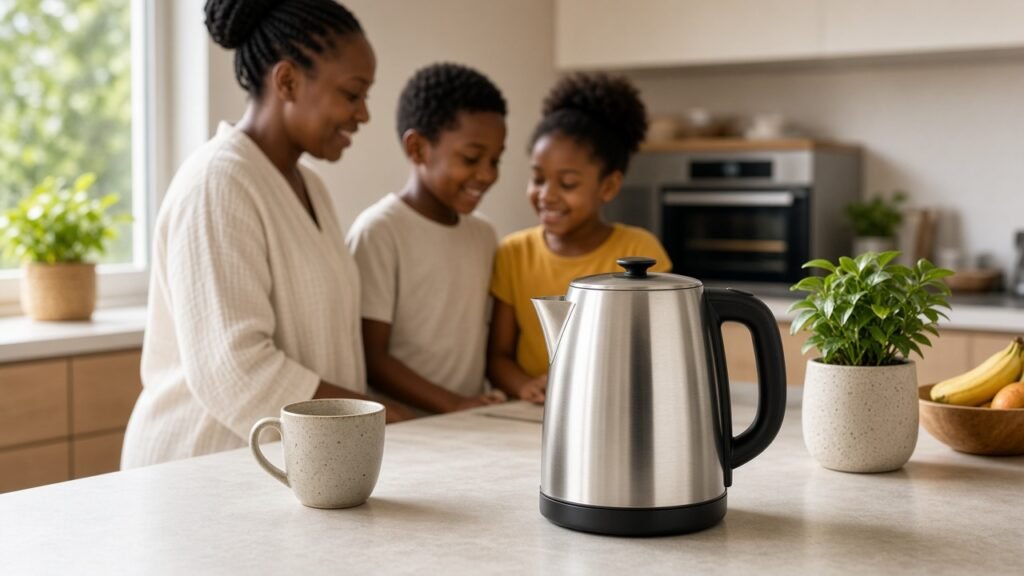
- Body material. A stainless steel kettle is durable and easy to wipe; plastic bodies can be lighter. Prefer clear material statements over buzzwords.
- Safety features. Look for auto shut-off, boil-dry cut-out, lid lock, and a stable cordless base with a clear on/off control.
- Water window and filter. A readable level mark and a removable scale filter make daily use and descaling simpler.
- What is in the box. Confirm base, kettle, and any stated warranty wording before checkout.
How to compare real value
Value is not the lowest sticker price. Score each option against how your kitchen actually works:
- Daily use match. One or two cups most days, or several rounds for a larger household?
- Clear, consistent specs. Prefer listings where title, description, and specification table agree on capacity, wattage, and material.
- Safety you can verify. Named shut-off and boil-dry features beat vague “safe design” claims.
- Ease of care. Wide openings and removable filters make descaling realistic; sealed designs that are hard to clean age badly in hard-water areas.
- Honest power fit. A slightly lower wattage that runs reliably on your circuit is more useful than a peak number that trips the breaker.
Recommended product paths on Afriyah
Household electronics on Afriyah are easiest to browse from the main shop, then narrow by the kettle specs you wrote down:
- Shop all products — start here for seller-led kitchen and household electronics with clear listing details.
- Household Electronics That Deliver Daily Value — use the same shop path to compare practical everyday appliances beyond a single product type.
Compare stainless steel kettle and auto shut-off kettle options from Afriyah sellers against the capacity and safety checklist above—not against the loudest claim in a product title.
FAQs buyers search before purchase
What capacity electric kettle should I buy?
For one or two people, around 1.0–1.2 litres is usually enough. Larger households that boil several cups at once often prefer about 1.5–1.7 litres. Match the tank to your busiest morning, not to a size you will rarely fill.
Does higher kettle wattage always mean better?
Higher wattage usually shortens boil time, but it draws more current. If your kitchen shares a circuit with a fridge, microwave, or iron, confirm the stated watts and prefer a model you can run without tripping the breaker.
Is a stainless steel kettle better than plastic?
Stainless steel is typically tougher and easier to wipe clean. Plastic can be lighter and cooler on the outside, depending on the design. Choose based on durability, cleaning, and the safety features listed—not the material name alone.
Which safety features matter most?
Prioritise auto shut-off when water boils, boil-dry protection if the kettle is switched on empty, a lid that stays secure while pouring, and a stable cordless base. Those features reduce the most common kitchen mishaps.
What should I check on the product page before checkout?
Confirm capacity, wattage, body material, safety features, and what is in the box, and make sure these match across the title and description. Read the delivery and returns terms on our Shipping & Returns page, then compare options in the Afriyah shop.
A good kettle is not the one with the flashiest finish. It is the one that shuts off safely, boils the volume you need, and fits the power you actually have. A short checklist and a careful look through Afriyah’s shop will get you there.