No products in the cart.
Emergency Lighting for Small Shops: A Practical Buyer’s Guide
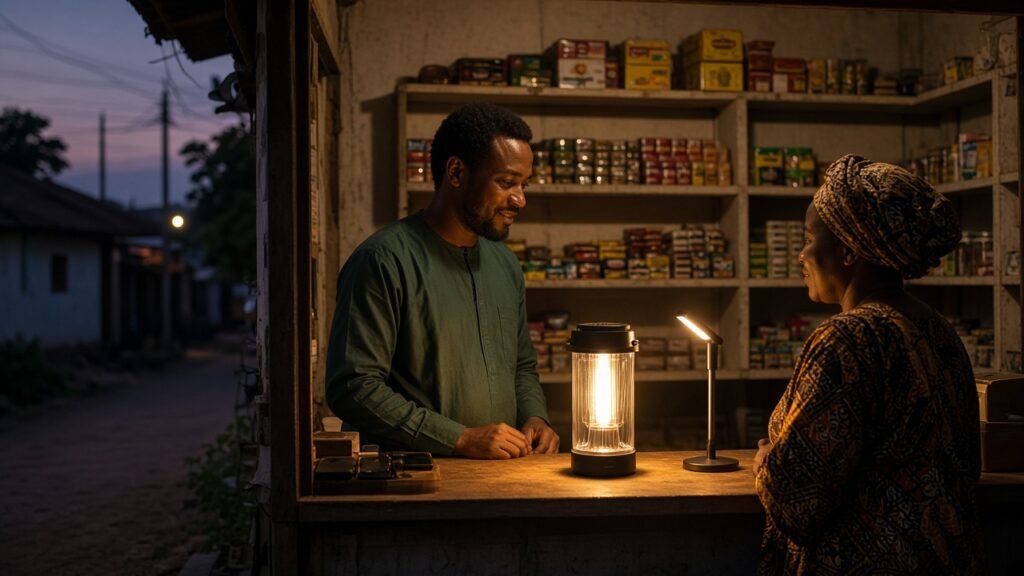
When the power goes off at seven in the evening, a small shop can lose its best trading hour in seconds. Customers cannot see the shelves, change is hard to count, and a dark counter feels less safe for everyone. For shopkeepers, kiosk owners, salons, and market traders across Africa, emergency lighting for small shops is not a luxury. It is what keeps the business open after dark. This guide covers what to check before you buy, so your money goes on light that actually lasts the evening, with no invented prices, stock claims, or “best ever” badges.
What buyers usually get wrong
Buying one light for the whole shop. A single bright lamp on the counter often leaves shelves and the doorway in shadow. Most small shops work better with one main light for the counter and a second for shelves or the entrance.
Trusting brightness claims without runtime. A very bright setting is useful only if it lasts. Many rechargeable shop lights quote their longest runtime on the lowest setting. Check how long the light runs on the setting you will actually use during trading hours.
Forgetting how it will be recharged. If power cuts are long or frequent, a light that only charges from the mains may be flat when you need it. A solar lantern, or a light that can charge from solar or a power bank, gives you more ways to stay ready.
Choosing fragile designs for a busy space. Shops are knocked, moved, and dusty. Thin plastic housings and loose handles fail quickly behind a crowded counter.
What specs matter most
Use this checklist when you compare shop lighting listings:
- Brightness, stated clearly. Look for a lumen figure on the listing rather than words like “super bright”. Compare like with like across products.
- Runtime per setting. The listing should say how long the light runs on high and on low. Plan for your longest normal evening without power.
- Charging options. Mains, USB, solar panel, or a mix. More options mean fewer evenings caught with a flat light.
- Charge time. A light that takes most of the day to recharge may not be ready for back-to-back outages.
- Light spread. Lanterns throw light all around, which suits a counter or kiosk. Directional or hanging lights suit shelves and doorways.
- Build and mounting. Check for a sturdy handle, a hook or stand, and a housing that copes with daily handling.
- Extra functions. Some lights include a USB output to top up a phone. Useful for card machines and mobile money, but treat it as a bonus, not the main reason to buy.
How to compare real value
The cheapest light is rarely the best value if it dims halfway through the evening. Score each option against how your shop actually trades:
- Hours covered. Does the stated runtime match the hours you trade without power?
- Area covered. Will one light do the counter, or do you need a pair for counter and shelves?
- Consistent specs. Prefer listings where the title, description, and specification table agree on brightness, battery, and runtime.
- Charging fit. Match the charging method to your supply. Solar suits long outages, while mains or USB suits shops with short, predictable cuts.
- Durability. A tougher light that lasts several seasons usually costs less over time than replacing a weak one every few months.
Recommended product paths on Afriyah
Start broad, then narrow down using the checklist above:
- Shop all products: browse solar lamps, rechargeable lights, and lighting essentials with clear listing details.
- Power Backup for African Homes: if you want to keep more than lights running, compare backup power options for fans, phones, and card machines.
Compare rechargeable shop light and solar lantern options against your trading hours and shop layout, not against the loudest claim in a product title.
FAQs buyers search before purchase
How many emergency lights does a small shop need?
Many small shops manage well with two: one for the counter where you serve and handle money, and one for shelves or the entrance. A very small kiosk may need only one good lantern. Walk around your space and note where customers stand and where they look for goods.
Is a solar lantern or a rechargeable light better for a shop?
It depends on your power supply. If outages are long or the mains supply is unreliable for days, a solar lantern can recharge without grid power. If cuts are short and you have mains most of the day, a rechargeable light charged from the socket may be enough. Lights that accept both give you the most flexibility.
What runtime should I look for?
Aim for a light whose runtime on your usual brightness setting covers your longest normal evening without power, with some margin. Check the runtime for each setting on the listing, not only the longest figure.
Can I use the light to charge my phone or card machine?
Some lights include a USB output, which is handy in an emergency. Using it drains the same battery that powers the light, so expect less light time if you charge devices from it. If you rely on a card machine every evening, consider a separate power bank or a backup power option.
What should I check on the product page before checkout?
Confirm brightness, runtime per setting, charging options, charge time, and what is in the box, and make sure these match across the title and description. Read the delivery and returns terms on our Shipping & Returns page before you order.
Build your shortlist faster
Write down three things before you browse: the hours you trade without power, the areas you need lit, and how you will recharge. Then shortlist two or three lights that meet all three. Shop reliable solar lamps, rechargeable lights, and lighting essentials in the Afriyah shop, with tracked delivery across the African markets we serve.