Household Electronics That Deliver Daily Value
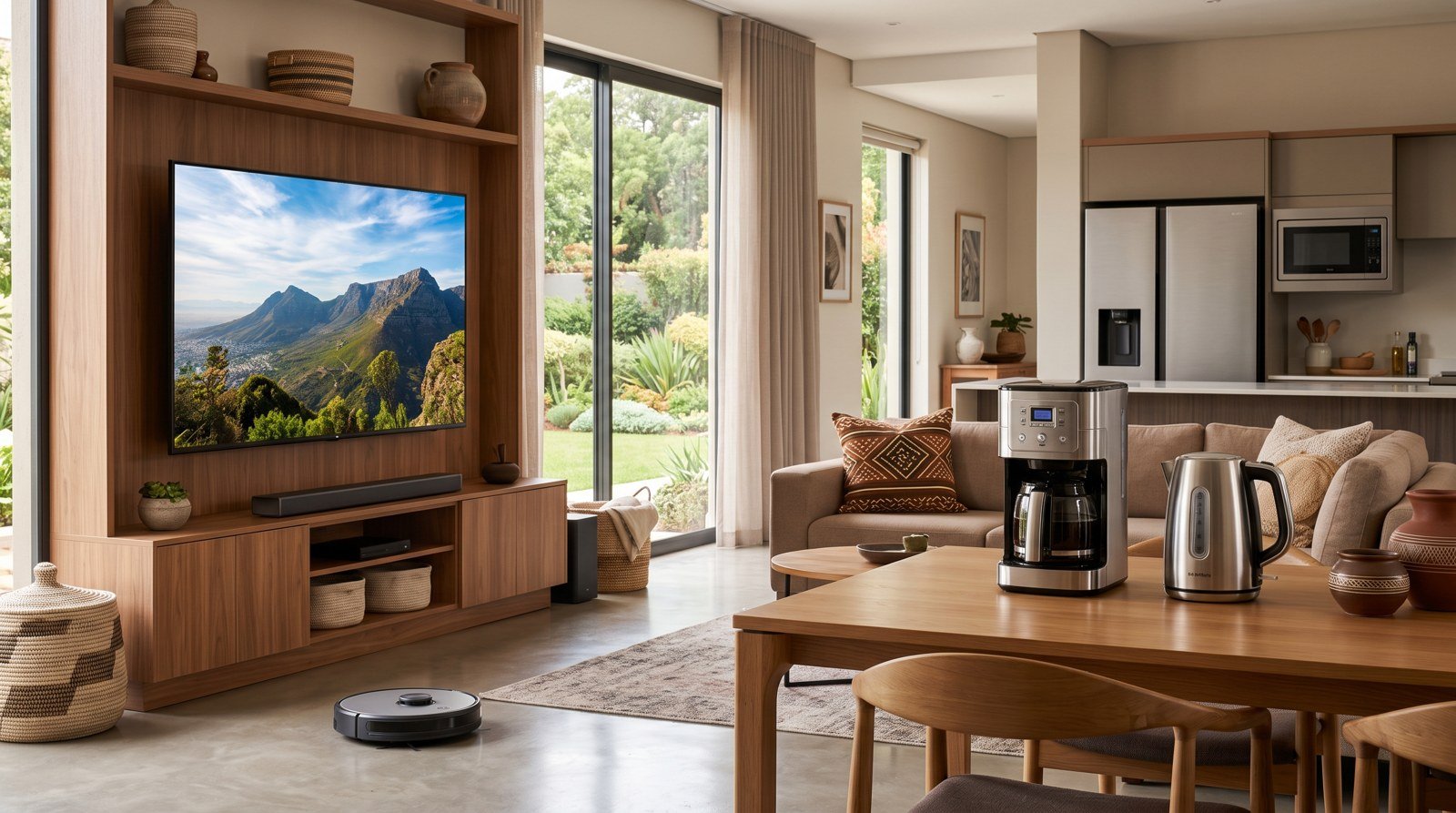
When shoppers search for the best household electronics online, they’re not hunting for novelty gadgets or AI-powered novelties—they’re solving real problems: a speaker that fills the compound without distortion; a power bank that lasts through three days of load-shedding; a tablet that keeps children learning while parents work; a kettle that boils fast and shuts off safely. At Afriyah Global, we curate household electronics not by trend cycles—but by daily utility. This isn’t about flashy specs. It’s about durability, clear labelling, dependable output, and honest pricing—backed by secure checkout and delivery support across Africa.
What buyers usually get wrong
Most shoppers treat household electronics like fashion: buy once, upgrade often, discard when the ‘new’ version drops. That mindset fails in African homes and small businesses—where resilience matters more than resolution, runtime over RAM, and repairability over polish. Consider these common missteps:
- Chasing wattage without context: A 40W Bluetooth speaker sounds impressive—until you realise its battery drains in 6 hours, its IPX7 rating doesn’t survive dust storms, and its charging port fails after 3 months of daily use. The Ortizan X8 Pro delivers 40W output and 30H playtime, IPX7 waterproofing, and dual USB-C inputs—verified in the live catalogue.
- Assuming ‘wireless’ means ‘maintenance-free’: Many wireless earbuds promise ANC but omit battery degradation data—or lack replaceable batteries entirely. The Baseus Bass EP10 NC includes IP55 dust resistance, Bluetooth 6.0 stability, and Type-C charging—all confirmed in its short description—making it a low-friction choice for school runs, market days, and remote calls.
- Overlooking compatibility with local infrastructure: Fast-charging cables rated for 120W mean little if your wall adapter caps at 5V/2A—or if your solar setup requires 24V input. The Toocki 100W USB-C cable explicitly lists PD3.0, 100W, and 6A support—critical for users pairing high-output chargers with laptops or tablets under variable grid conditions.
These aren’t theoretical concerns. They’re daily friction points Afriyah sellers have observed—and solved—through vetted, specification-transparent listings.
What specs matter most
Forget marketing fluff. For practical home electronics, three spec categories drive real-world performance:
- Power delivery integrity: Not just ‘max wattage’, but sustained output, voltage stability, and thermal management. Example: The 1.5L electric kettle specifies 1500W, 220V, and automatic shut-off—no ambiguity. That tells you it’s built for standard African household voltage and won’t trip breakers during peak usage.
- Battery endurance & recharge realism: Look for both capacity (e.g., 20000mAh) and output capability (e.g., PD 22.5W). The Essager 20000mAh power bank states PD 22.5W and two built-in cables—meaning no dongle hunting, no bottlenecked charging, and verified compatibility with iPhone 17 and Xiaomi devices.
- Environmental resilience: IP ratings, material grade, and passive design. The 16PCS foldable laptop stand is made from portable metal—not plastic—and supports phones, tablets, and laptops. Its adjustable height and heat dissipation are stated—not implied.
If a listing omits these, it’s not an oversight—it’s a red flag.
How to compare real value
Real value isn’t price per unit—it’s cost per year of reliable service. Below is a comparison of five top-performing everyday electronics currently live on Afriyah—filtered for clarity, consistency, and African-use relevance:
| Product | Key Verified Specs | Use Case Fit | Why It Delivers Daily Value | Afriyah Link |
|---|---|---|---|---|
| Ortizan X8 Pro Bluetooth Speaker | 40W, IPX7, 30H playtime, RGB lights, 3 EQ modes | Outdoor gatherings, small business kiosks, home entertainment | No battery guesswork—30H runtime confirmed; IPX7 means rain, dust, and accidental spills won’t kill it; dual inputs allow seamless switching between phone and tablet. | View product |
| Xiaomi RedmiBuds 4 Lite | IP54, Bluetooth 5.3, 20H playtime, Type-C charging | Daily commuting, remote learning, hands-free calls | Bluetooth 5.3 ensures stable pairing across Android/iOS; IP54 resists sweat and light rain; 20H battery covers multiple school weeks on a single charge. | View product |
| JBL Flip 7 Portable Speaker | 20V, AI Boost Sound, 16H playtime, PushLock accessories | Backyard events, mobile vendors, student dorms | AI Boost optimises audio for open spaces; PushLock lets you mount it on fences or stands—no extra hardware needed; 16H runtime avoids mid-event recharging. | View product |
| Toocki 100W USB-C Cable | 100W, PD3.0, 6A, Type-C to Type-C | Multi-device households, remote workers, students | Handles full-speed charging for MacBooks, Huawei MateBooks, and Samsung tablets—without overheating or throttling. No ‘up to’ claims—just verified 100W. | View product |
| BDF 7 Inch Kid Tablet | Android 13, 4GB RAM, 64GB ROM, 1TB expandable, 4000mAh | Children’s education, parental supervision, offline content | 4GB RAM prevents lag during video lessons; 1TB expansion means years of app updates and downloads; 4000mAh battery sustains 6–8 hours of screen time—no midday shutdowns. | View product |
Recommended product paths on Afriyah
We don’t push one-size-fits-all bundles. Instead, Afriyah matches electronics to actual life stages and roles:
- For families with young children: Start with the BDF 7″ Kid Tablet (proven Android 13 stability + expandable storage), pair it with the 16PCS foldable stand (for shared viewing), and add the Thermal Water Bottle (750ml capacity, stainless steel—no leaks, no rust).
- For remote workers & small traders: Prioritise uptime and versatility. The Essager 15W Magnetic Qi Charger works with iPhone, Xiaomi Pad, and Android—no cable clutter. Add the ORICO Universal Travel Adapter (20W GaN, EU/US/UK/AU plug support) and the 1.5L Electric Kettle (1500W fast boil + auto-off)—a trio that powers productivity, not panic.
- For homes managing intermittent power: Go hybrid—solar-ready and grid-resilient. The 100W Portable Power Station (76.8Wh LiFePO4, solar charging capable) pairs with the DC24V Solar Neon LED Strip (IP68, cuttable, flexible)—delivering light where the grid doesn’t reach.
All paths link directly to live, in-stock items—with no redirects, no ‘coming soon’ placeholders, and no hidden stock limits.
FAQ
Do Afriyah’s household electronics come with warranties or after-sales support?
Afriyah does not list warranty terms or after-sales support details in the current catalogue snapshot. Buyers must verify warranty coverage, return eligibility, and service options directly with the seller before purchase—either via the product page’s contact button or Afriyah’s customer support channel. Do not assume standardised coverage.
Are these electronics compatible with African voltage standards (220–240V, 50Hz)?
Yes—where voltage is specified, it aligns with regional norms. For example, the electric kettle states 220V/50HZ; the USB-C cable lists 5V input; and the LED ring light notes 220V operation. When voltage is missing (e.g., many speakers or earbuds), confirm with the seller prior to ordering.
Can I use these products with solar setups or power stations?
Many can—but only if explicitly designed for DC input or solar charging. Confirmed solar-compatible items include the 100W Portable Power Station, DC24V Solar Neon LED Strip, and Y&H MPPT Solar Charge Controller. For non-specified devices (e.g., kettles, blenders), assume AC-only unless the seller confirms DC adaptability.
Do any of these household electronics ship pre-configured for African networks (e.g., 5G bands, Wi-Fi frequencies)?
Only where explicitly noted. The BDF Kid Tablet and New 7″ Android Tablet list ‘5G WiFi’—but do not specify band support (e.g., 2.4GHz vs 5GHz). Similarly, cameras and baby monitors mention ‘WiFi’ but omit protocol versions. Verify supported bands with the seller before purchase—especially for security-critical devices like doorbells or surveillance cameras.
Household electronics should simplify life—not complicate it. At Afriyah Global, we don’t sell features—we deliver function. Every product listed here meets one test: Does it work, reliably, every day? That’s the promise behind the best household electronics online. And it’s why we invite you to discover seller-led electronics with dependable specs, clear pricing, and practical value on Afriyah.