No products in the cart.
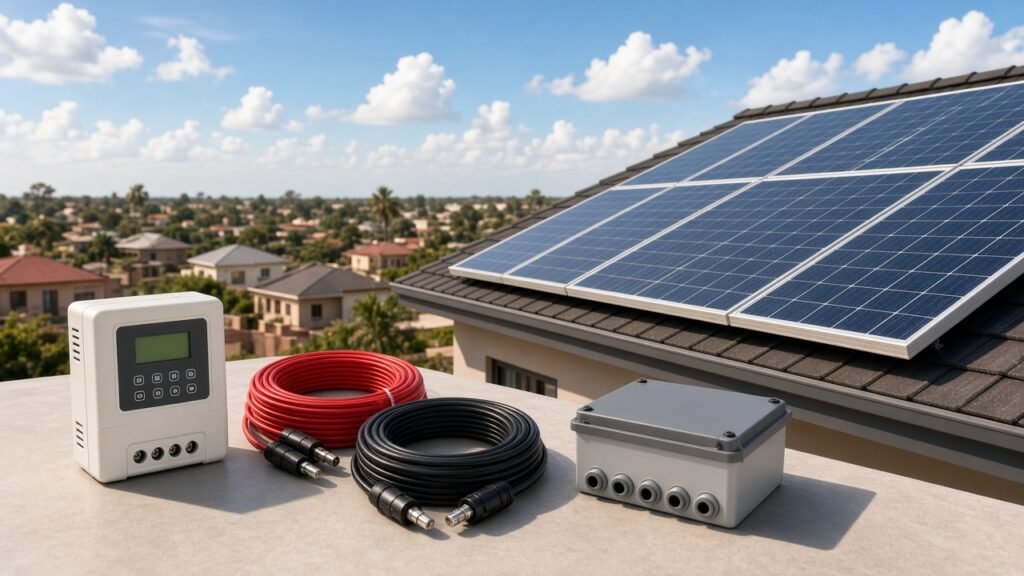
PV Panels, Controllers & Solar Accessories: What Smart Buyers Should Check First
A solar array that looks fine on paper still fails in real use when the charge controller, cables, or mounting hardware do not match the panels and battery. Homes and small businesses across Africa often buy panels first, then discover mismatches that waste money and cut reliability. This guide is for commercial investigation: what to check before you choose solar panel accessories for home systems—controllers, cables, connectors, and the small parts that keep a PV setup safe and useful. You will not find invented prices, stock claims, or medical promises here—just practical checks that reduce costly mistakes.
What buyers usually get wrong
- Panels without a controller plan. Panels make power; a controller manages how that power reaches the battery. Skipping controller type and rating is a common cause of early battery wear.
- Undersized or unmarked solar cables. Thin or poorly rated DC cable overheats, drops voltage, and wastes harvest. Look for clear conductor size and outdoor/UV notes on the listing.
- Mixing connector standards without adapters. MC4-style and other connectors are not interchangeable by guesswork. Confirm plug type on both panel and cable ends.
- Ignoring voltage and current limits. Controller input voltage and charging current must fit the panel string and battery bank. “Compatible with solar” is not a specification.
- Forgetting protection and weather exposure. Fuses, breakers, junction boxes, and outdoor-rated hardware matter as much as the panel watts on the brochure.
What specs matter most
Use this short checklist when you compare PV system setup accessories for the loads and batteries you actually have:
- Controller type and rating. Note PWM versus MPPT where stated, maximum PV input voltage, and maximum charge current. Match these to your panel string and battery chemistry notes on the listing.
- Cable gauge, length, and insulation. Prefer listings that state conductor size, polarity colouring, and suitability for outdoor DC runs—not vague “heavy duty” wording alone.
- Connector and polarity clarity. Confirm connector family, polarity marks, and whether pairs or single leads are included.
- Mounting and mechanical fit. Rails, clamps, and brackets should state roof or ground use, material, and what panel frame thickness they support when that detail is given.
- Protection devices. Look for DC breakers/fuses, surge protection, or junction boxes with clear voltage/current ratings you can understand.
- Battery and system voltage. 12 V, 24 V, and 48 V systems are not mix-and-match. Align accessory ratings with the system voltage you plan to run.
How to compare real value
Real value is not the cheapest accessory on the page. It is the combination that keeps power flowing without rework:
- Write your system sketch first. Panel watts and open-circuit voltage (where listed), battery voltage, and daytime loads—then shop controllers and cables against that sketch.
- Prefer specific numbers over buzzwords. “Off-grid accessories” sounds useful; amp, volt, and cable-size figures are what you can verify.
- Budget the path, not only the panel. Controller, DC cable, connectors, and protection often decide whether a modest array performs reliably.
- Read return and shipping terms before checkout. Electrical parts are hard to reuse once cut or installed—confirm the store’s policy on shipping and returns for your market.
- Plan for heat and dust. Controllers and junctions need ventilation and weather sense; a bargain box that overheats outdoors is not a saving.
Recommended product paths on Afriyah
Browse panels, controllers, cables, and solar accessories from vetted Afriyah sellers. Start with a clear system sketch, then compare listings that publish the ratings above.
- Shop all products — scan current solar and power listings, then filter by what your home or small business actually needs.
- PV panels, controllers & solar accessories — use the shop to compare controllers, solar cables, and related off-grid accessories alongside panels.
When a listing is unclear on voltage, current, or connector type, treat that as a reason to keep looking rather than guessing.
FAQs buyers search before purchase
Do I need an MPPT or PWM charge controller?
Both regulate charging; MPPT is often more efficient when panel voltage is higher than battery voltage, while PWM can suit simpler, well-matched systems. Choose from what the listing states about input voltage, charge current, and battery type—not from the acronym alone.
What size solar cable should I buy?
Cable size depends on current and run length. Prefer listings that state conductor size and outdoor DC suitability, and keep runs as short and tidy as your layout allows. If the page only says “thick cable,” ask for the gauge or pick a clearer product.
Can I mix panels from different sellers on one controller?
Only when voltages, currents, and wiring topology stay inside the controller’s published limits. Mismatched strings can underperform or stress equipment. When in doubt, keep a string matched and rate the controller with headroom.
What should I check on the product page before checkout?
Confirm system voltage, controller input and charge ratings, cable or connector details, what is included in the box, and shipping or return terms for your country. Clear specs beat marketing adjectives every time.