No products in the cart.
Solar Cable and Connector Sizing: Avoid Power Loss in Home Systems
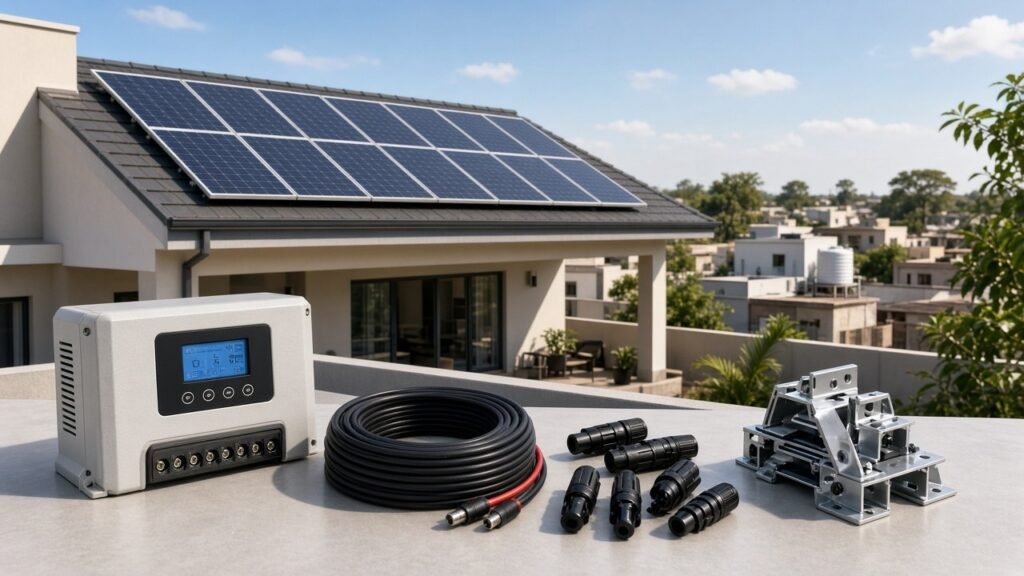
Undersized solar cable is one of the quietest ways a home PV system loses power and runs hot. A solid solar cable size guide is not about memorising every wire chart; it is about matching cable gauge, connector type and run length to the current your panels and charge controller actually carry. This article walks African buyers through cable gauge, MC4 connectors and voltage-drop basics so you can shortlist accessories on Afriyah without inventing prices, stock claims or medical-style guarantees.
What buyers usually get wrong
Treating any “solar cable” as interchangeable. PV string cable, battery cable and indoor AC cable are different jobs. Using the wrong type for outdoor DC runs can leave you with soft insulation, awkward connectors or a voltage drop you only notice when production dips.
Ignoring run length. A short roof-to-controller run can tolerate a thinner conductor than a long path across a compound. Buying by amp rating alone, without measuring how far the cable must travel, is a common cause of lost watts.
Mixing connector families without a plan. MC4-style connectors are common on module leads, but adapters and mismatched brands add resistance and water-ingress risk if they are not rated for outdoor PV use. Force-fitting unlike parts is not a fix.
Assuming thicker is always better. Oversized cable costs more and is harder to terminate cleanly. The goal is enough cross-section for your current and distance, not the thickest spool on the shelf.
What specs matter most
Conductor size (gauge / mm²). Look for the cross-sectional area and the continuous current the cable is rated to carry. Match that to your string or array current with headroom for heat in hot African daytime conditions, not only the label amp figure in ideal lab air.
Voltage rating and insulation. Outdoor PV cable should be rated for the DC system voltage you use and for UV and weather exposure. Soft consumer flex that cracks in sun is a false economy.
Voltage drop over distance. Longer runs need more copper (or a higher system voltage design) to keep drop low. Ask for the cable size, the approximate metres from modules to controller or combiner, and the expected current before you buy.
Connector type and IP rating. Prefer connectors that match your module leads (often MC4-compatible) and that seal properly outdoors. Check whether the listing shows male/female pairs, polarity marking and outdoor suitability.
Polarity and colour convention. Clear positive/negative marking reduces reverse-polarity mistakes at install. Confirm what the product page actually ships: cable only, connectors only, or a pre-terminated set.
How to compare real value
Start from your system numbers: panel or string current, system voltage class, and the metres of cable you need. Then compare listings on conductor size, outdoor DC rating, connector compatibility and what is included in the price—not on vague “heavy duty” wording.
Prefer sellers who state mm² or AWG, voltage rating and connector type in plain text. If those fields are missing, treat the offer as incomplete until clarified. Avoid medical, cure or “guaranteed production” claims; cable quality affects losses and safety margins, not miracles.
For shipping and returns on Afriyah orders, use the published shipping and returns policy rather than assumptions about dispatch times or free shipping.
Recommended product paths on Afriyah
Browse PV Panels, Controllers & Solar Accessories and related solar gear on Afriyah’s shop. Filter toward cables, connectors and controllers whose product pages list conductor size, voltage rating and connector type. Keep a shortlist of accessories that match your array current and run length before you add panels or inverters you cannot wire cleanly.
If you are still mapping the wider category, start from Shop all products and narrow to solar or power accessories with clear specifications. Afriyah lists its own products and third-party sellers; read each listing’s stated specs rather than assuming one SKU fits every roof.
FAQs buyers search before purchase
What does a solar cable size guide actually help me decide?
It helps you choose conductor size and connector type for your current and cable length so voltage drop and heat stay within sensible limits. It does not replace a qualified installer for complex or grid-tied work.
Are MC4 connectors required on every home system?
Many modern modules ship with MC4-style leads, so matching connectors are the usual path. Always check what your panels and controller use; do not force incompatible plugs together.
Why does voltage drop matter on short African rooftop runs?
Even moderate drop wastes generation as heat in the cable. Longer compound or roof-edge runs make the problem worse, so size for distance as well as amps.
Can I reuse ordinary household cable for PV DC strings?
Outdoor PV DC usually needs cable rated for that duty: UV, weather and the correct voltage class. Ordinary indoor flex is often the wrong insulation and temperature rating for exposed DC runs.
What should I verify on the Afriyah product page before checkout?
Confirm conductor size, voltage rating, connector type, what is included, and shipping or return terms that match the live shipping and returns page. Skip listings that hide those basics.
Build your shortlist faster
Write down your approximate string current, system voltage class and cable metres. Open Afriyah’s shop, keep only cable and connector listings that publish size and outdoor DC ratings, and discard vague “solar wire” offers. That shortlist is faster to compare than scrolling every accessory claim on the open web.