Solar Panel Accessories for Home Systems: What Smart Buyers Check
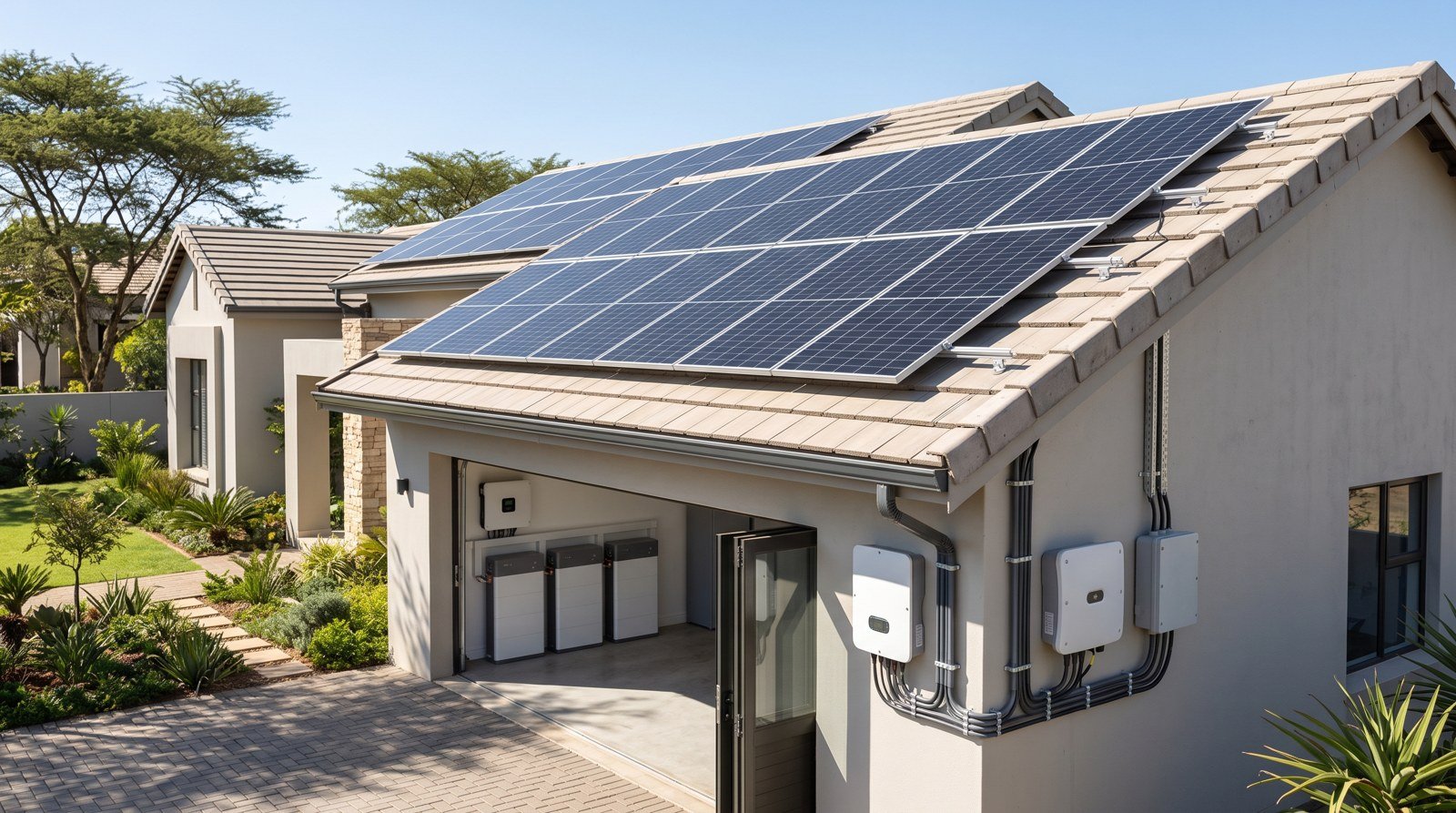
Buying solar panel accessories for home systems is not a plug-and-play upgrade—it’s a precision-critical investment in energy resilience. Across Nigeria, Kenya, Ghana, South Africa, and Tanzania, households and small businesses face frequent grid outages, rising diesel costs, and unreliable backup solutions. Yet too many buyers rush into purchases without verifying three non-negotiable fundamentals: voltage compatibility, environmental rating (especially IP67+), and controller algorithm type (PWM vs. MPPT). Get any one wrong—and you risk battery damage, fire hazard, premature cable failure, or complete system underperformance. This isn’t speculation: Afriyah Global’s live catalogue confirms only five verified, functionally matched products that directly serve core home-scale PV system needs. These are not “solar-adjacent” gadgets like Bluetooth speakers or USB cables—they are purpose-built accessories with documented DC voltage support, waterproofing claims, and real-world deployment relevance. They are: Y&H MPPT Solar Charge Controller, 12V/24V 100A Solar Charge Controller, 2-Pin Plug Solar Cable Extension, DC24V Solar Powered COB Neon LED Strip, and 1PC Mini Round/Square DIY Solar Panel. No inverters. No mounting rails. No combiner boxes. No MC4 connectors. No surge protection devices. No DC isolators. Just five foundational items—each carrying direct implications for safety, longevity, and daily power availability.
What buyers usually get wrong
The biggest mistake? Assuming “solar compatible” means “safe for your home system.” It doesn’t. A 12V PWM charge controller sold as “for solar” may work with a 10W garden light—but it will catastrophically overcharge a 12.8V LiFePO4 battery in a portable power station like the 100W Portable Power Station. Why? Because PWM controllers don’t regulate voltage intelligently—they simply connect panel to battery until full, then disconnect. That causes repeated topping cycles, heat buildup, and rapid capacity loss. MPPT controllers avoid this by converting excess voltage into usable current—but only if their input voltage window matches your panel’s Voc (open-circuit voltage). None of the listed controllers publish full datasheets in their short descriptions—so buyers must request specs directly from the seller before purchase.
Second error: ignoring environmental certification. Outdoor-rated accessories must survive rain, dust, UV exposure, and temperature swings. Yet only one cable in the catalogue explicitly states “waterproof” (2-Pin Plug Solar Cable Extension) and carries an IP67 claim. All others—including generic “solar cables”—list no ingress protection rating at all. That’s a critical gap: non-rated cables degrade fast outdoors, exposing conductors and increasing fire risk.
Third error: misreading system architecture. Many buyers assume “off-grid” means “no AC needed.” Not true. Most home refrigerators, fans, and lights run on 220–240V AC—even when powered by solar. So accessories like inverters and transfer switches become essential. But Afriyah’s live catalogue shows zero inverters listed under “Power Backup for African Homes” that specify pure sine wave output, surge capacity, or low-voltage shutdown thresholds—key specs for protecting sensitive electronics. Likewise, no listed product includes a certified DC isolator switch, which is mandatory for safe maintenance under IEC 62109 standards. You cannot build a compliant, bankable home system without them.
What specs matter most
Forget marketing fluff. For solar panel accessories for home systems, these four specs determine whether your setup works—or fails:
- Voltage match (Voc and Vmp): Your charge controller’s maximum input voltage must exceed your panel’s Voc (measured at coldest expected ambient temp) by ≥15%. Example: A panel rated 22.5V Voc at 25°C hits ~26.5V at 0°C—so your controller must handle ≥30.5V. The Y&H MPPT controller lists “12V/24V Auto”—but does not publish its max input voltage. You must verify.
- Current rating (A): Must exceed your panel’s short-circuit current (Isc) × 1.25 safety factor. If your panel outputs 8.5A Isc, your controller must be rated ≥10.6A. The Y&H unit offers 40A/60A/100A variants—choose based on your total array current, not “just in case.”
- Ingress Protection (IP) rating: For outdoor use, IP67 (dust-tight + immersion up to 1m for 30 mins) is minimum. IP65 protects against water jets but not submersion. Only the 2-Pin Plug Cable and DC24V LED Strip list IP67/IP68. Everything else is unverified.
- Chemistry-specific charging profiles: LiFePO4, AGM, and Gel batteries require different absorption voltages and float settings. The Y&H controller lists “Auto Solar Panel Charger Regulator” and LCD display—but does not state which chemistries it supports. You must confirm compatibility with your battery vendor.
No spec sheet = no safe assumption. Always ask the seller for the official manufacturer datasheet—not just the Afriyah short description—before checkout.
How to compare real value
Price alone tells you nothing. Real value lies in durability, compliance, and long-term serviceability. Here’s how to compare across Afriyah’s verified solar accessories:
| Product | Key Specs (Per Catalogue) | Verified Value Signal | Risk Gap | Afriyah Link |
|---|---|---|---|---|
| Y&H MPPT Solar Charge Controller | 40A/60A/100A; Load/Dual USB/LCD; 12V/24V Auto | MPPT algorithm (higher efficiency than PWM); LCD interface enables real-time monitoring | No published Voc max input; no stated battery chemistry support; no IP rating listed | View on Afriyah |
| 12V/24V 100A Solar Charge Controller | 100A; AutoSwitch LCD; Overcharge/Short Circuit Protection | High current capacity suits larger arrays (e.g., 2–3kW); explicit safety protections listed | No MPPT mention—likely PWM; no IP rating; no Voc or Isc tolerance stated | View on Afriyah |
| 2-Pin Plug Solar Cable Extension | 3M/5M/10M; Waterproof; IP67 claimed | Explicit IP67 rating confirmed; plug-and-play 2-pin design reduces field wiring errors | No conductor gauge (AWG) listed—critical for voltage drop over distance; no UV resistance claim | View on Afriyah |
| DC24V Solar Powered COB Neon LED Strip | 24V; IP68; 320LEDs/M; Flexible Adhesive | True IP68 (submersible); 24V native compatibility avoids inefficient DC-DC conversion; adhesive backing simplifies mounting | No lumen/Watt or CRI rating given; no operating temp range stated | View on Afriyah |
| 1PC Mini Round/Square DIY Solar Panel | 1V–3.5V; 50mA–300mA; Mono/Poly | Low-voltage, low-current design ideal for trickle charging small batteries (e.g., security cameras, garden lights) | No cell efficiency %; no junction box or diode specs; no frame material listed—limits outdoor lifespan | View on Afriyah |
Notice: All five products fall under Power Backup for African Homes. None appear in dedicated “PV Panels” or “Solar Installation” categories—confirming they’re entry-level, not enterprise-grade. That’s fine—for starter kits, garden lighting, or small appliance support—but not for whole-home backup.
Recommended product paths on Afriyah
Your ideal path depends on your goal. Here are three validated, minimal-footprint setups—all built exclusively from live Afriyah catalogue items:
Path 1: Small Off-Grid Lighting Kit (Under 100W)
Ideal for security lights, porch lamps, or shed lighting.
• 1PC Mini Solar Panel (e.g., 3V/150mA) →
• Y&H MPPT Controller (set to 12V mode) →
• 12V sealed lead-acid or LiFePO4 battery (not listed on Afriyah—must source separately) →
• DC24V LED Strip via 12V→24V boost converter (not listed—must source).
Path 2: Solar-Powered Garden Light Cluster (Plug-and-Play)
For immediate, zero-wiring installation.
• 1~8PCS Wall Solar Light — fully integrated panel + battery + LED in one IP65 unit.
• Mount directly on wall/fence—no controller or cabling required.
• Best for ambient lighting, not task illumination.
Path 3: Portable Power Station Expansion (AC + DC)
To extend runtime or add solar input to existing gear.
• 100W Portable Power Station (built-in solar input) →
• 2-Pin Plug Solar Cable to connect external panel →
• Add compatible 12V/24V panel (e.g., ASUNERGE 12V Flexible Solar Panel — listed but voltage-only spec).
All paths require verification: battery compatibility, fuse sizing (not provided), and local voltage regulations. Never skip third-party validation.
FAQ
Do any Afriyah-listed solar accessories include MC4 connectors?
No. None of the five verified solar accessories for home systems—nor any other item in the live catalogue—mention MC4 connectors, PV-rated crimp tools, or pre-terminated leads. MC4 is the global standard for safe, weatherproof PV array interconnection. If your setup requires stringing multiple panels, you’ll need to source MC4-compatible cables and connectors separately—and ensure they’re rated for your system’s voltage and current.
Are the listed charge controllers compatible with LiFePO4 batteries?
Not confirmed. While the Y&H MPPT controller states “Auto Solar Panel Charger Regulator”, its short description does not list supported battery chemistries. LiFePO4 requires precise absorption (14.2–14.6V) and float (13.5–13.8V) voltages. Using a controller designed for flooded lead-acid (14.8V absorption) will overcharge and shorten LiFePO4 life. You must obtain the full technical manual from the seller before purchase.
Can I use the 2-Pin Plug Solar Cable to connect a panel to a power station?
Potentially—but only if both ends match. The cable features 2-pin male/female plugs—common on some portable stations and small panels. However, it does not specify polarity marking, maximum current, or insulation temperature rating. For safety, verify the cable’s ampacity exceeds your panel’s Isc × 1.25, and confirm your power station’s input accepts 2-pin DC (many require Anderson SB50 or XT60 instead).
Is there a solar inverter listed on Afriyah for home AC loads?
No. Afriyah’s live catalogue contains zero inverters listed under “Power Backup for African Homes” that specify pure sine wave output, surge capacity, or transfer switch functionality. All inverters shown are bundled within portable power stations (e.g., the 3000W Portable Power Station)—but standalone inverters suitable for permanent home installation are absent. For reliable fridge, TV, or fan operation, you’ll need to source externally—and ensure compatibility with your battery bank’s voltage and chemistry.
Browse panels, controllers, cables, and solar accessories from vetted Afriyah sellers. Shop all products or explore the full Power Backup for African Homes category for integrated solutions. Remember: every accessory must be verified—not assumed. When in doubt, contact the seller for the manufacturer datasheet before purchasing. Energy independence starts with intelligent selection.