No products in the cart.
Portable Power Station vs Inverter: Which Suits Your Home?
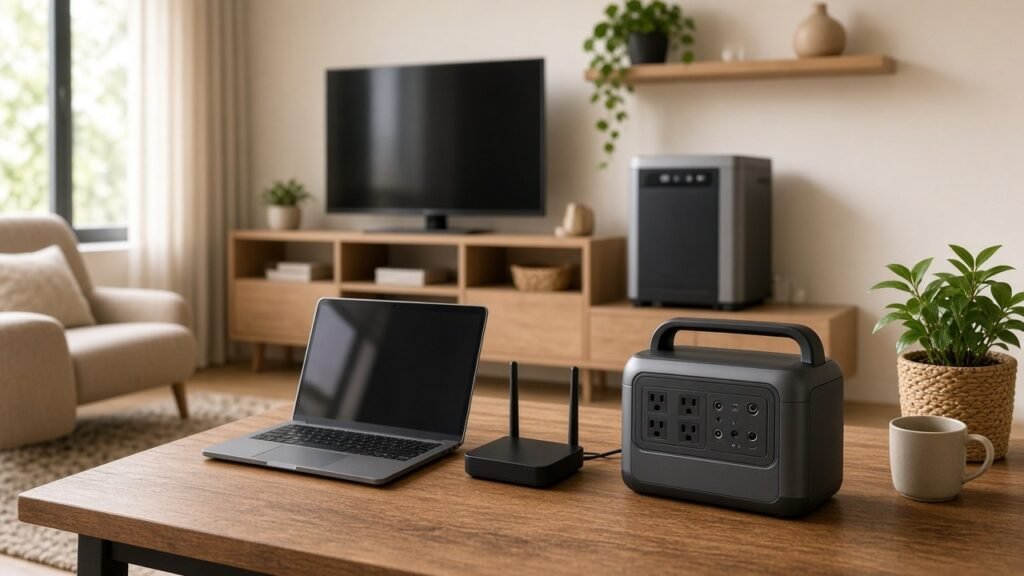
When the lights go out mid-evening, the first question is usually which kit will keep the router, TV and phones alive with the least fuss. Choosing a portable power station vs inverter is not about which one is “better” in the abstract. It is about how you live through outages: whether you need something you can carry between rooms, or a fixed backup that covers more of the house. This guide walks through the trade-offs African buyers usually face, with no invented prices, stock claims or “#1” badges, so you can shortlist with clear criteria on Afriyah.
What buyers usually get wrong
Matching wattage to one appliance only. A kit that runs a TV may still stall if you also plug in a fan, decoder and phone chargers. Add up the loads you actually use together, not the single heaviest device.
Confusing capacity with surge power. Capacity (how long you can run) and surge (the brief peak when motors or compressors start) are different. Listings that stress one figure and hide the other make comparisons hard.
Buying portability when you need a fixed install. A portable power station shines when you move it between a living room, bedroom or small shop. A home inverter with battery is often the better fit when you want circuits covered every evening without plugging things in by hand.
Ignoring charging paths. If outages are long, a unit that only recharges from the mains may sit empty. Check whether solar input, car charging or a generator input is available on the listing, and whether that matches how you already keep power available.
What specs matter most
Use this checklist when you compare a portable power station and a home inverter:
- Continuous output (watts). Must cover the appliances you run at the same time, with a little headroom.
- Surge / peak watts. Important for fridges, pumps and some TVs that draw a short spike at start-up.
- Battery capacity. Look for watt-hours (Wh) or amp-hours with voltage stated, so you can estimate hours of use.
- Output types. AC sockets for household plugs, plus USB if you mainly need phones and routers.
- Portability vs fixed install. Weight, handle and size for a station; wall or floor space, cabling and switchover for an inverter system.
- Recharge options. Mains, solar, vehicle, or a mix. Match this to how often and how long your outages last.
- Transfer behaviour. Some setups switch automatically when the grid drops; others need you to plug loads in. Know which you are buying.
- Clear listing detail. Prefer product pages where title, description and specification table agree on watts, capacity and outputs.
How to compare real value
Score each option against how your home or small workspace actually loses power:
- What must stay on. Router and lights only is a different budget from fridge, TV and work laptop together.
- How long outages last. Short evening cuts favour smaller portable kits; multi-hour or overnight cuts favour higher capacity or a fixed inverter with battery.
- Where you need power. One room that changes, or several fixed sockets around the house.
- Who will operate it. A grab-and-go station is simple. A wired inverter needs correct installation and safe cabling.
- Consistent specs. Treat vague “powers a whole home” claims with caution unless the watts and capacity are written plainly.
Recommended product paths on Afriyah
Start with category browsing, then narrow using the checklist above:
- Power Backup for African Homes: compare inverters, UPS and backup options aimed at home and small-business loads.
- Shop all products: browse wider electronics and accessories if you also need lights, cables or related kit.
Compare trusted inverter, UPS and backup-power products from Afriyah sellers against your real load list, not against the loudest claim in a product title.
FAQs buyers search before purchase
What is the main difference between a portable power station and a home inverter?
A portable power station is a self-contained battery with sockets you plug into. You move it where you need it. A home inverter (often paired with a battery) is usually fixed and can cover selected circuits or appliances through a more permanent setup. Portability versus installation is the core trade-off.
Which is better for a router, TV and phones during load-shedding?
Either can work if the continuous watts and capacity cover those devices for the length of a typical cut. Many households start with a portable power station for that shortlist because it is easy to set up. If you want more rooms covered every evening without moving a box around, look at inverter and battery systems in the Power Backup category instead.
Do I need installation for a portable power station?
Usually no. You charge it, then plug appliances into its outlets. Always follow the product instructions for charging and ventilation. Fixed inverter systems are the ones that typically need careful installation and safe wiring.
How do I estimate the capacity I need?
List each device’s wattage and how many hours you need it during an outage, then add them up and leave headroom. Compare that figure with the battery capacity and continuous output on the listing. If the listing only gives vague runtime claims, ask for or look for Wh and watts in the specification table.
What should I check on the product page before checkout?
Confirm continuous and surge watts, battery capacity, socket types, weight or install needs, and recharge options. Make sure the title and specs match. Then check Afriyah’s shipping and returns information for your destination before you pay.
Build your shortlist faster
Write down the appliances that must stay on, how long a normal outage lasts, and whether you need something movable or fixed. Open Power Backup for African Homes, filter to options that meet your watts and capacity, and keep only listings with clear specifications. That shortlist is faster to compare than scrolling every “backup” claim on the open web.