No products in the cart.
Solar Lamp Runtime and Battery Capacity Explained
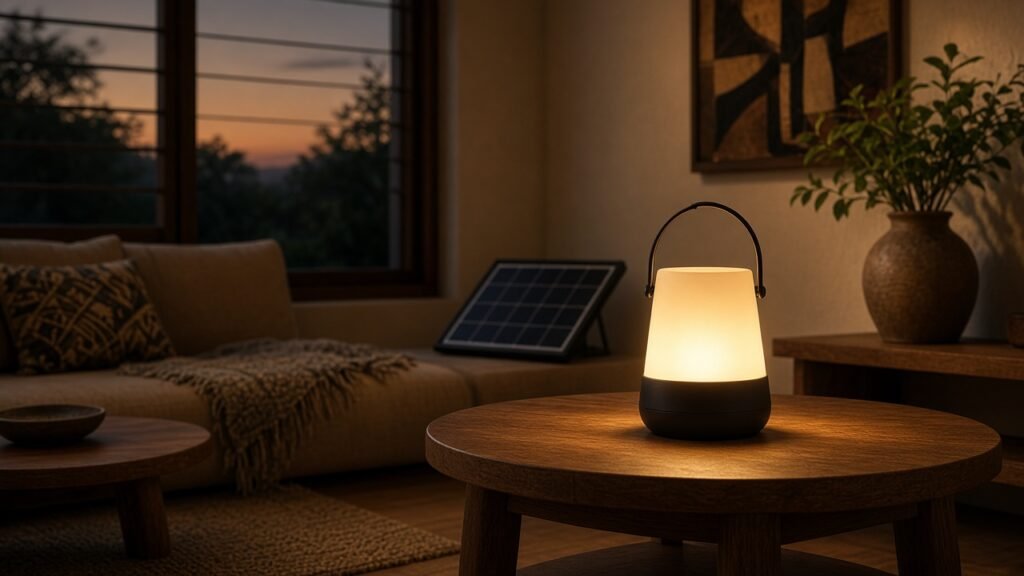
When the power goes off, a solar lamp is only as useful as the hours it actually gives you. Many buyers across Africa pick a lamp on the biggest runtime number on the box, then find it fades long before bedtime. This guide explains how solar lamp battery capacity, brightness and charging time fit together, so you can read a listing honestly and choose a light that lasts through your real evenings.
What buyers usually get wrong
- Trusting the longest runtime figure. The headline runtime is often measured on the lowest brightness setting. On the setting you actually use to cook, read or serve customers, runtime can be much shorter.
- Ignoring charging time. A large battery does not help if your panel cannot refill it in one day of sunshine. Cloudy or rainy-season days make this gap bigger.
- Comparing lumens without context. A higher lumen figure means a brighter light, but it also drains the battery faster. Brightness and runtime always trade off against each other.
- Missing what is in the box. Some listings show a panel, cable or mounting kit that is sold separately. Check the contents before you compare prices.
What specs matter most
Battery capacity (mAh or Wh)
Battery capacity tells you how much energy the lamp can store. It is usually shown in milliamp-hours (mAh) or watt-hours (Wh). Watt-hours are easier to compare between products because they account for battery voltage. If a listing gives only mAh, compare lamps that use the same battery type, and treat the figure as a guide rather than a promise of hours.
Brightness (lumens) per setting
Lumens measure how much light the lamp gives out. A small reading light needs far less than a lamp meant to light a whole room or a shop counter. Look for the lumen figure on each mode, not just the maximum, so you know how bright the setting you will use really is.
Runtime per setting
A trustworthy listing gives a runtime for each brightness mode. Match the mode you need to the hours you are usually without power in the evening, and leave some margin, because batteries hold less charge as they age.
Solar charging time and backup charging
Solar charging time is normally stated for full, direct sunlight. Real-world charging is slower when it is cloudy or the panel is shaded. A lamp that can also charge by USB or from the mains gives you a fallback during long rainy spells.
Battery type (lithium lamp battery or other)
Many modern lamps use a lithium battery, which is light and holds charge well. Whatever the type, check the listing for how the battery should be charged and stored, and whether it can be replaced. Follow the manufacturer’s care instructions to get the most life from it.
How to compare real value
Use this simple check when two lamps look similar:
- Write down the hours you usually need light after dark and the brightness you need for that task.
- Find the runtime each lamp gives on that brightness, not on its dimmest mode.
- Check whether the panel can recharge the battery in one day of normal sunshine where you live.
- Confirm extra features you will use, such as a USB output for a phone. Remember that charging a phone drains the same battery that powers the light.
- Compare the full price for what is in the box, including the panel and cables, then read the delivery and returns terms.
A lamp with a slightly smaller battery but honest, clearly stated runtimes per mode is often better value than one with a large headline number and no detail.
Recommended product paths on Afriyah
Start in the Afriyah shop and look through the solar lamps, rechargeable lights and home lighting essentials. On each product page, compare brightness, runtime per setting, battery details, charging options and box contents before you add to cart. If you also need to keep a phone, router or fan running, our guide to portable power stations and inverters can help you decide whether a lamp alone is enough.
FAQs buyers search before purchase
Does a bigger battery always mean a longer runtime?
Not always. Runtime depends on both battery capacity and how bright the lamp is set. A bigger battery on a very bright setting can run out sooner than a smaller battery on a lower setting. Compare runtime on the same brightness.
Why does my solar lamp not last as long as the box says?
The stated runtime is usually measured on the lowest setting with a fully charged battery. If the battery was not fully charged, the weather was cloudy, or you use a brighter mode, you will get fewer hours. Batteries also lose some capacity as they age.
How long does a solar lamp take to charge?
Check the charging time on the product page. It is normally given for full sunlight, so allow longer on cloudy days. Placing the panel in direct sun, away from shade, helps it charge faster.
Is mAh or Wh better for comparing solar lamps?
Watt-hours (Wh) give a fairer comparison because they include voltage. If only mAh is listed, compare lamps that use the same battery type and rely more on the stated runtime per setting.
What should I check before checkout?
Confirm brightness, runtime per mode, battery details, charging options and what is in the box, and make sure these match across the title and description. Read the delivery and returns terms on our Shipping & Returns page before you order.
Build your shortlist faster
Note three things before you browse: how many hours you need light after dark, how bright it needs to be, and how you will recharge it. Then shortlist two or three lamps that meet all three. Shop reliable solar lamps, rechargeable lights and home lighting essentials in the Afriyah shop, with tracked delivery across the African markets we serve.